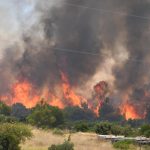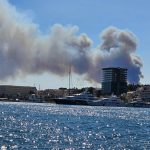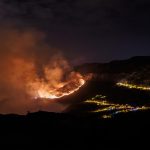
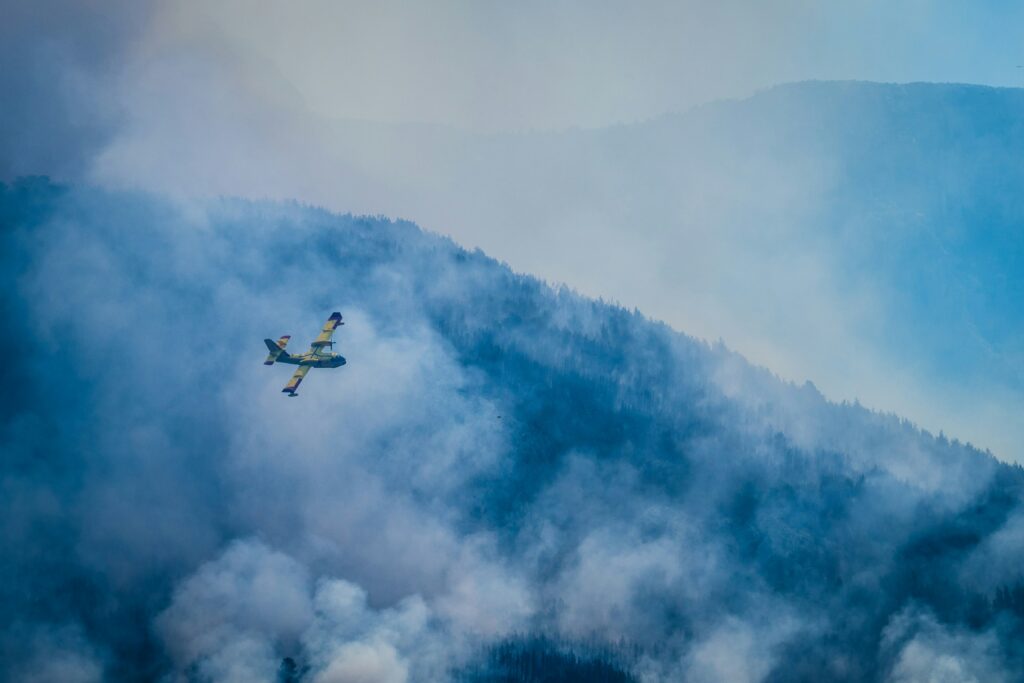
August the 27th, 2026 – Croatian fires often occur on overgrown and neglected private land where it’s difficult or impossible for Croatian Forests (Hrvatske šume) to enter and deal with the situation.
Large fires have become a European reality and no longer pose a threat only to the extreme south of Europe. As never before, fires have also hit the United Kingdom, the continental part of France and Germany. Marija Brnic reports for Poslovni that there have been fires up in Scandinavia as well, and in conditions of increasingly frequent extreme heatwaves they represent a greater threat than before for a far larger number of countries. The authorities have duly recognised this, as a joint defence has already been established, so that unlike earlier times, member states help one another by sending firefighting teams and firefighting fleets.
According to the European Forest Fire Information System (EFFIS), forest fires already reached a historic record last year – more than one million hectares of forest burned within the EU back in 2025. This year, according to data from the European Commission’s Joint Research Centre, as of the first week of August, 506 thousand hectares of forest area had burned, which is a third more than in the same period of the most devastating 2025.
Since the recovery of a destroyed forest ecosystem is measured in decades compared with agricultural crops or buildings, the question arises of what to do with these areas, and how this changes the picture on the timber raw material market. As of the first week of August, 506 thousand hectares of forest area had burned – a third more than in the same period of the most devastating 2025.
it’s still too early to make educated estimates
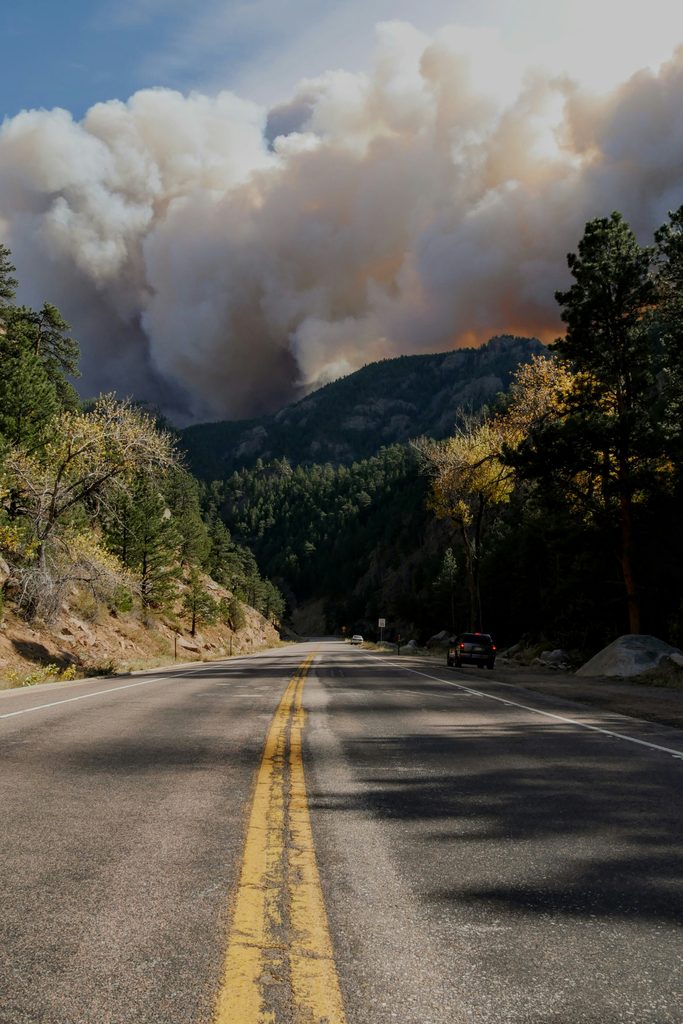
These questions are also relevant at the Croatian level, although, fortunately and thanks to a well-organised fire defence, the areas burned so far are still below the record levels of 2017 and the devastating 2022. By mid-August, 9.6 thousand hectares had been affected by fire.
Croatian Forests were asked for their estimates of damage to forested areas under their management that were affected by fires, and what the ratio of affected areas is compared with the previous year. They revealed that it is too early for any estimates; more concrete information will only be possible after the end of the fire season. However, they significantly emphasised that in the largest fire this year, the one in the wider Omiš area, only about ten percent of the total burned area was under the management of Croatian Forests.
As for the rehabilitation of the fire-affected areas, they explain that the law provides that it must be carried out no later than two growing seasons after the fire occurred. They are responsible for rehabilitating areas owned by the state, and they carry it out mainly independently or by engaging external subcontractors. The first step, if it concerns so-called high forest, is the extraction of timber mass, followed by preparation for the replanting of trees, which is done purposefully, in accordance with the adaptation of the tree species to the particular terrain.
However, some forest areas also regenerate on their own, especially those under pine trees, because during a fire the cones practically explode and disperse seed up to about ten metres. This brings us to the increasingly frequent and louder public questioning of replacing the flammable Aleppo pine with another tree species. Europe, precisely because of fires and climate change, is intensively considering abandoning conifers and switching to mixed and more resistant deciduous forests.
changes are unfortunately not likely

As for changes along Croatia’s long, heavily irregular coastal area, this is not currently likely. Experts have long pointed out that on karst and rock, where there is no fertile soil, deciduous trees cannot survive, and that the Aleppo pine is precisely suitable because it has extremely modest requirements. Moreover, it is the best at creating conditions for the start of humus production. That is also the reason why on the areas affected by fires that are under Croatian Forests, a rapid change of tree species is not likely.
“Given the conditions we constantly encounter, the pioneer species, in this case the Aleppo pine, simply does not manage to perform its primary function because of fires – creating conditions for the successful growth of other species. Unfortunately, we find it increasingly difficult to wait the sufficient number of years that are approximately needed for that process of conversion into mixed forests, because fires due to the climate and human behaviour have become ever more frequent and destructive,” they emphasise from Croatian Forests, reminding that 90 percent of them are caused by human negligence and carelessness or malicious intent.
Among other things, they note that fires often start from neglected and overgrown agricultural areas in private ownership, for which they are not responsible and which they are not allowed to enter, and which are very often overgrown precisely with Aleppo pine that has not been maintained there and has no firebreaks.