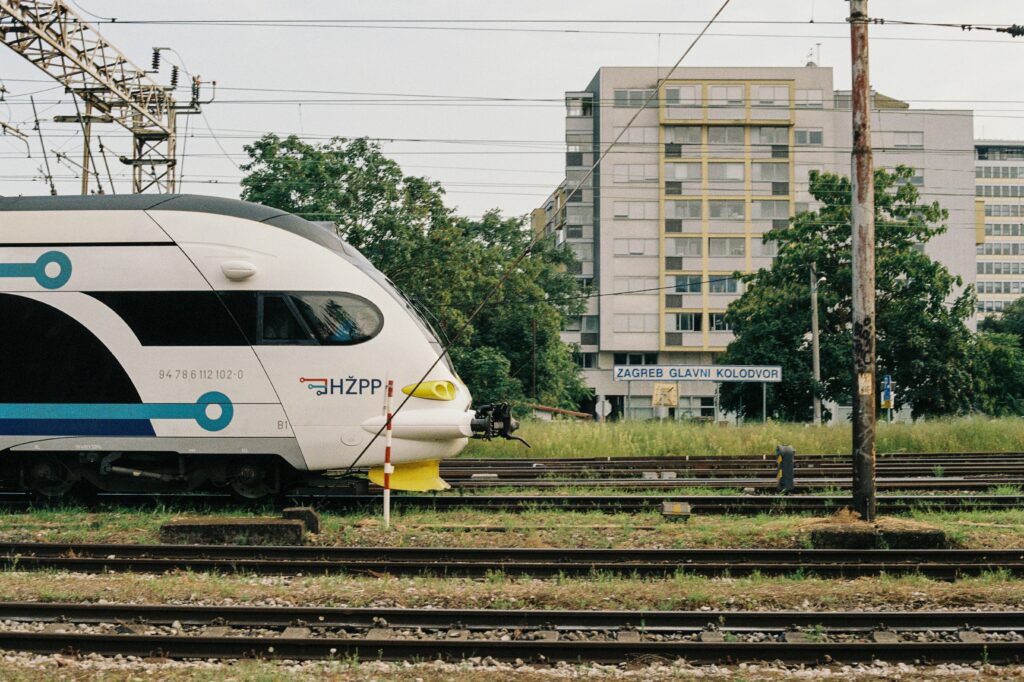
August the 25th, 2026 – Croatian railway ambitions are closely linked with European defence efforts, as the country’s “decade of the railway” is still not really being felt on the ground by most.
Any reason for the renewal and development of the railway system in Croatia is very useful, including the security and defence one. But its civilian role remains primary. Index/Deutsche Welle/Igor Lasic reports that following two serious railway traffic incidents at the beginning of this month in Croatia, this mode of passenger and freight transport is once again a topic for the Croatian public.
Moreover, the general public has been reminded of the fact that Croatia is apparently currently in the middle of its “decade of the railway”. This is a state project for the development of this long-neglected mode of transport, with an investment of six billion euros for new tracks and vehicles. Yet despite years of reconstruction, the results are still not really visible on the ground, even though some concrete works have long been planned. The announced “railway renaissance” will therefore clearly still have to wait, and the recent traffic accidents have uncomfortably highlighted this uncertainty.
On top of everything, a new element has been included in the reasoning for the renewal of the Croatian railway sector, and that’s the wider European defence system. Europe is rapidly arming itself, and Croatia has also bought, among other things, more than 40 German Leopard 2 tanks. These, however, because of their exceptional weight, require equally exceptional railway transport capacities. All of this ultimately enters into the final calculation of the development project of the public company Croatian Railways. On the other hand, its relative urgency and the need for centralisation of the system somewhat remove the possibility of imminent privatisation of the sector, which until recently was quite realistic.
so long, privatisation
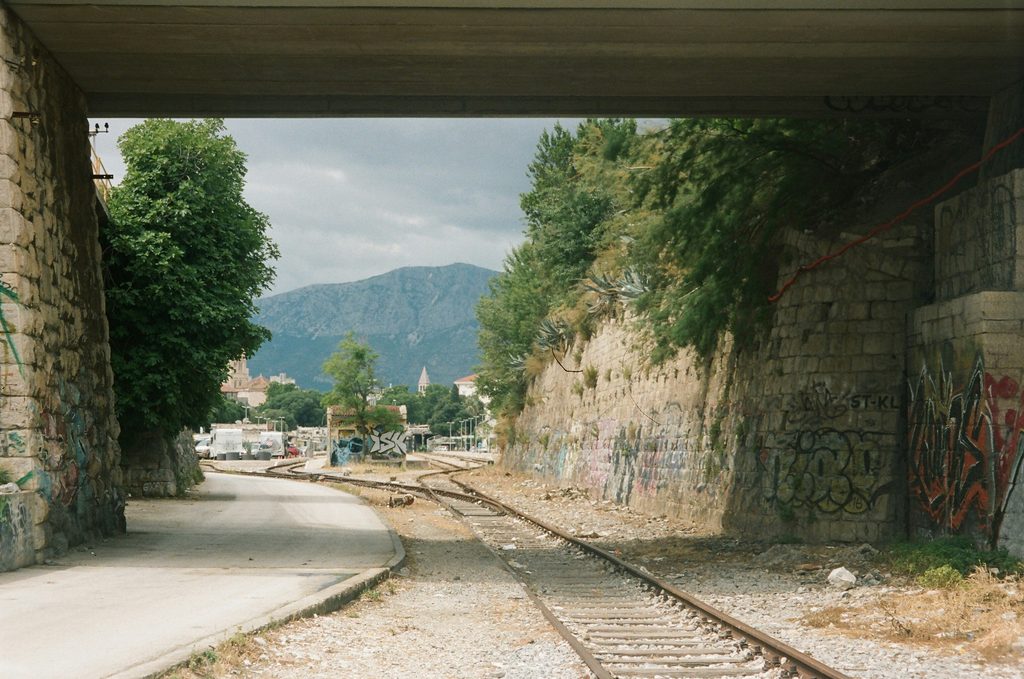
“Only through the security sphere and social cohesion around the issue of defence have we come to the conclusion that the railway must be managed by the state if we want an efficient system,” Ante Klečina, a railway expert and lecturer at the Department of Sustainable Mobility and Logistics of the University Sjever (North) in Koprivnica and Varaždin, told DW. He referred to the experience of some more developed European countries, such as Great Britain, whose experiments with railway privatisation ended rather ignominiously. Services became of poor quality and too expensive, the system failed in various aspects, and over time it was abandoned.
“First and foremost should be their functionality for civilian needs and, in fact, the organisation of civilisation,” Klečina continues, “which is relevant at every moment if we do not put that priority out of our minds. Whoever swears by the advantages of market mechanisms forgets that they are not developmentally suitable for large public systems, those that enable basic requirements.” In his opinion, the same applies to other elementary systems, e.g. healthcare, education and the judiciary, etc. The private sector, says Klečina, can be a supplement in certain segments, but the backbone must remain public.
“The reason is the necessity of central planning of such systems, as well as their primarily non-profit task, but also the need for enormous investments for which private individuals usually have neither the capacity nor the interest. Having seen this in practice, Europe has recently abandoned the idea of privatising railways, and the defence topic came afterwards as an additional reason,” considers Ante Klečina, formerly president of the Railway Alliance in the Republic of Croatia. He further notes that this mode of transport has no equal with regard to a series of key factors: above all overall cost-effectiveness, economic multiplier effects and environmental suitability.
central planning will always be needed
Socioeconomist Toni Prug, for his part, believes that behind the question of Croatian railways lies the general problem of political and scientific rejection of planning and public production as a relic of the past. That past concerns the period of socialism and Yugoslavia, and everything connected with it remained at the very least stigmatised after the war in Croatia. “In reality, however, all successful states are huge public production systems,” says Prug, “in which planning decides on the largest budgets within economies, on interventions whose importance for the population surpasses the importance of decisions that market actors make.”
This assistant professor at the Faculty of Humanities and Social Sciences of the University of Rijeka highlights the rule in business that when a market actor makes a mistake, i.e. when things go badly, competition replaces him. “And railways, like all other production systems of a public character that are physically fixed and have monopoly status, need to be carefully planned. Mistakes are much harder to correct. They are also managed differently, different parameters are optimised, a focus on profit does not help. It often cannot even be the goal; the goals are determined by the plan.” At the same time the question arises of whether the Republic of Croatia has the professional staff for designing and implementing this.
“private goals have prevailed over practicality”

“Our profession and managerial staff are educated through faculty and professional curricula that say almost nothing about why and how to produce systems and services of a public character, and why they are superior for certain needs,” Prug is convinced, adding that this knowledge still exists in some Croatian public systems, while in others it has collapsed and been left to spontaneity. In his assessment, the City of Zagreb represents a recent example in Croatia that planning can return and capacities be rebuilt. And on higher-quality, data- and analysis-based foundations, which does not concern the railway but can be a general model.
Toni Prug, who in his scientific work has dealt quite a bit with the topic of public sector management, finally conveyed to us the impression that Croatian Railways have so far been a kind of victim of the oil and automobile lobby. “Their private and profit goals have prevailed over the practicality, efficiency, safety and ecological superiority of modern railway systems,” he told DW. Such a hierarchy could change soon thanks to military priorities. But the future of the railway and of social development in general will certainly not be bright if its primarily civilian advantages remain somewhere beside the tracks.