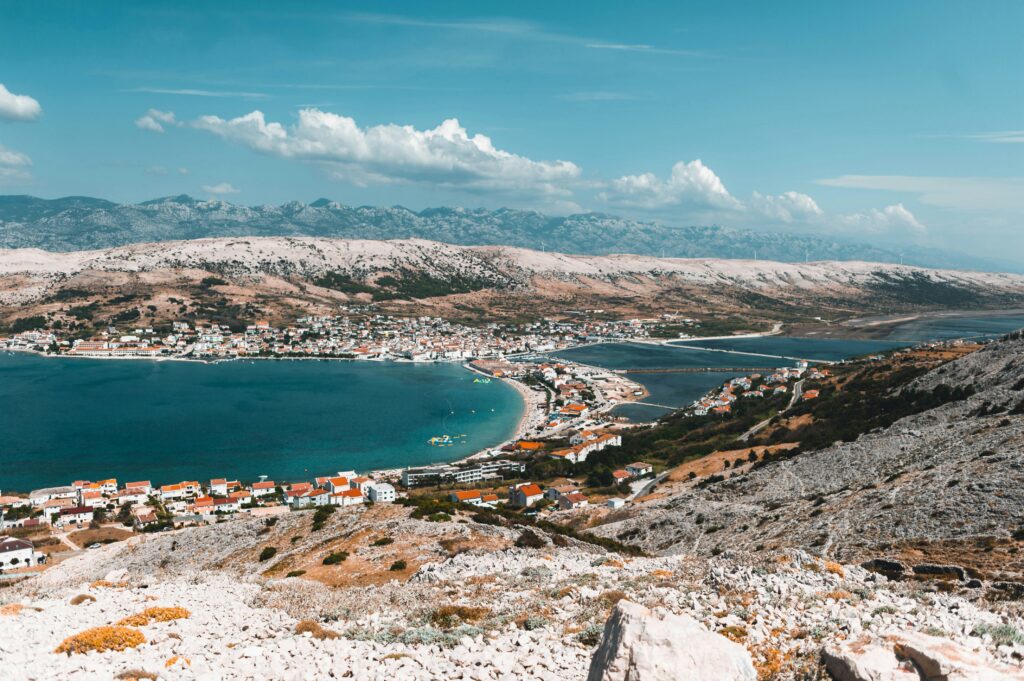
September the 1st, 2025 – Did you know that there’s a Croatian island split between two counties? It looks like a landscape taken straight from the surface of the moon, and it’s known for its cheese.
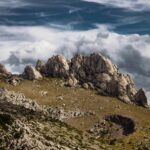
As Putni kofer/Antonio Ivcevic writes, Croatia is a country known worldwide for its beautiful 1000+ islands. These beautiful islands, islets and rocks are scattered across the crystal clear Croatian part of the Adriatic Sea which separates it from Italy, each carrying its own special stories, customs, characters and in many cases – dialects. However, among all these islands, there’s one that stands out for something quite unusual. It is the only one in the entire country divided between two counties. The bizarre, moon-like island of Pag is adorned with rugged, somewhat unforgiving landscapes, Pag lace and the famed cheese. It’s also an administrative peculiarity that makes it truly special – even by infamously terrible Croatian bureaucratic standards.
contrasts and complexities
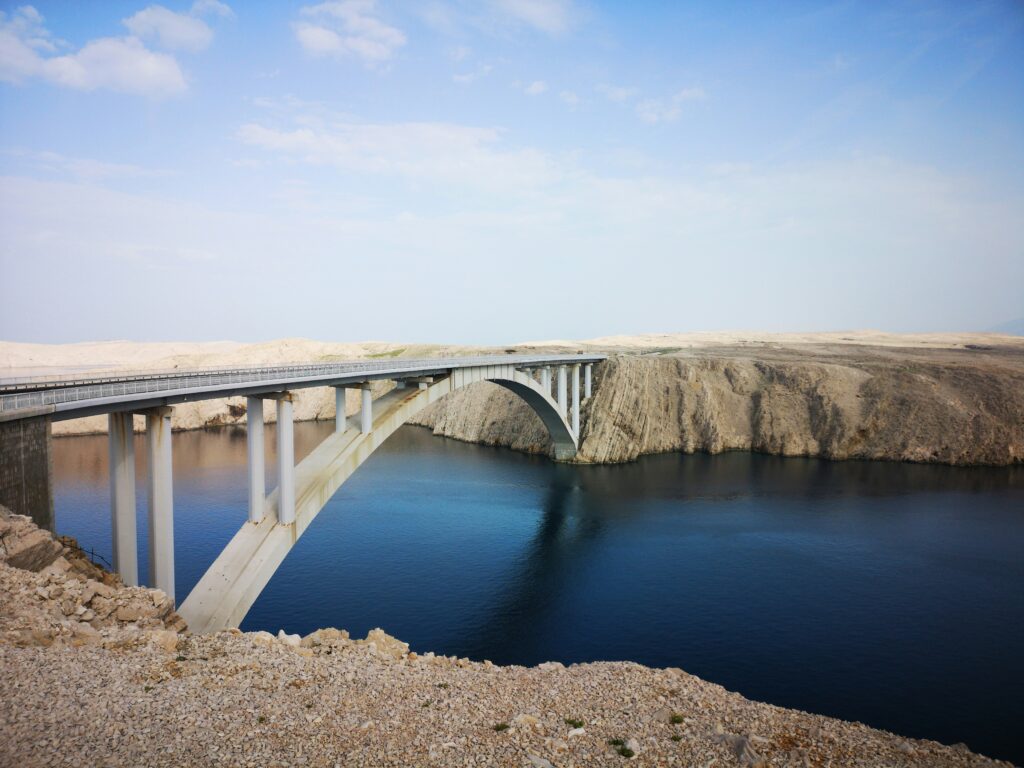
This Croatian island split between two counties has its roots in history and some extremely complex territorial demarcations. Today, that is very clearly reflected in its administrative affiliation. The northern part of the island, where Novalja is located, belongs to Lika-Senj County, while the southern part with Pag, the Municipality of Kolan and the Municipality of Povljana forms part of Zadar County. This makes the island of Pag a truly unique example of the division of an island into two administrative units, which is rare not only in Croatia, but also in the wider Mediterranean context.
This uniqueness has also created interesting contrasts on the Croatian island in two counties. While Novalja has become known as a tourist centre in more recent decades, mostly owing to Zrće beach and its famous nightlife, the southern part of the island has a slightly different identity. The town of Pag itself is known for its centuries-old tradition of making Pag lace, which is under UNESCO protection, and Kolan is known as the home of the most famous Croatian cheese. Povljana, on the other hand, offers quieter coves and beaches, far from the hustle and bustle, which creates the impression of almost another world within the same island.
an invisible border
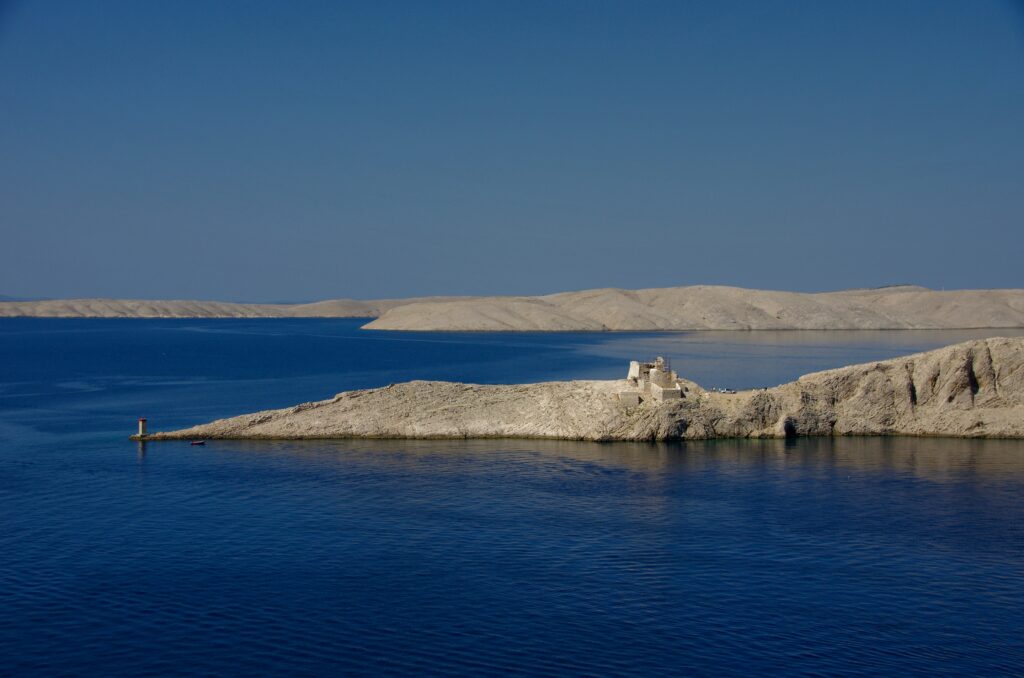
The border between the counties on Pag isn’t visible in everyday life or in any particularly concrete way, but it is very much felt in administrative matters and the organisation of life. The island’s inhabitants thus find themselves in an oddly specific situation: although they share the same island and a common identity, depending on where they live, they belong to different county institutions, offices and administrative centres.
Pag is also an island of contrasts. It is adorned with a rocky and dry landscape on one side, and a rich cultural and gastronomic tradition on the other. The division between Lika-Senj and Zadar counties only further emphasises its uniqueness and shows how a geographical space can be viewed through multiple layers, natural, cultural and administrative. That’s why, in addition to being one of the most special Croatian islands, Pag remains a unique example of an island “border” that connects, not separates.
pag cheese – beloved throughout europe
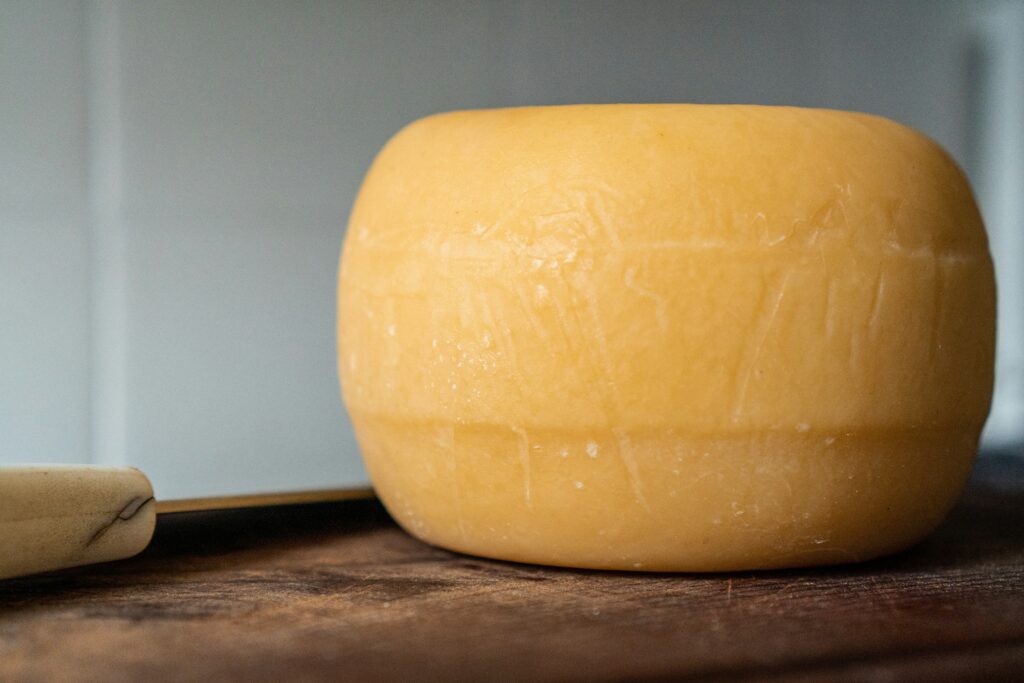
Pag cheese is by far the most famous product on the island, made exclusively from the milk of Pag sheep. Their diet includes aromatic herbs like sage and immortelle, as well as salt that the wind brings across the Velebit Channel and deposits on each leaf. It is this unusual combination that gives the cheese its characteristic, spicy taste and aroma that makes it unique globally. Many compare it to all kinds of other, arguably better known European cheeses, but the people of this Croatian island located in two counties will always say that Pag cheese has no competition, because it has something that can be created only on this island, in the unusual combination of stone, sea and wind.
The process of making Pag cheese is still done by hand in many island households, just like it used to be countless centuries ago. The milk is processed immediately after milking and stored in dark rooms on wooden shelves. Every single piece of cheese on the island tells its own story.
Younger cheese is more tender and soft, while the aged one, which can stand for more than a year, develops a rich and full flavour that arouses admiration even among the most demanding of food lovers. Today, Pag cheese has won numerous domestic and international awards, but for local producers, the greatest reward is when someone returns to the island and asks for “the same cheese as last year.”