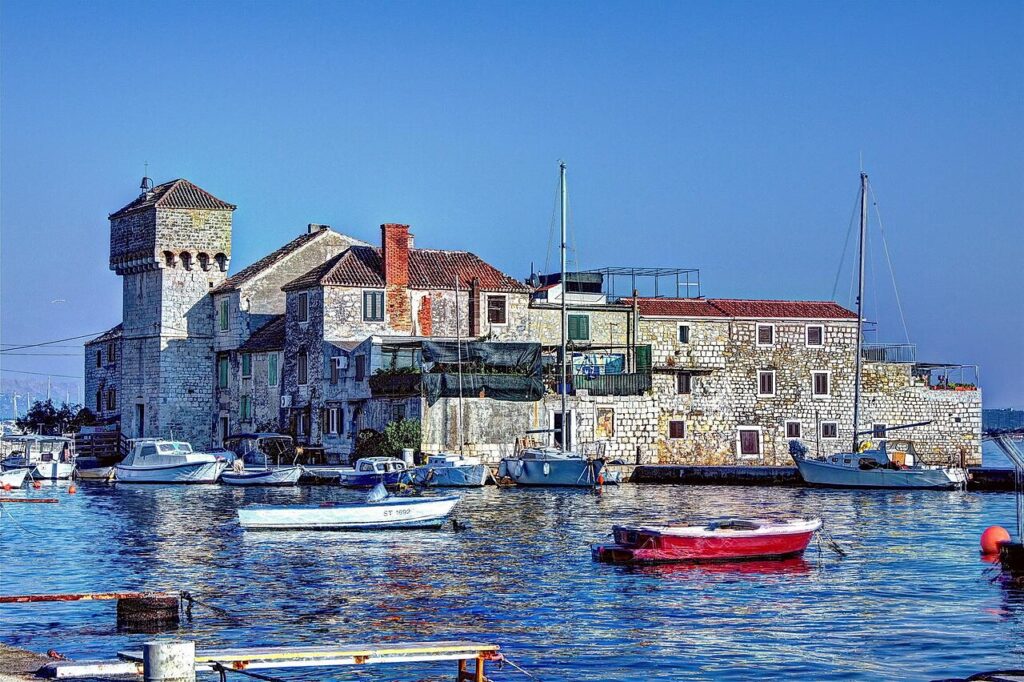
August the 22nd, 2026 – There is a very old Croatian fortress located in central Dalmatia that was constructed by nuns. Very many families found safety and refuge there over the centuries.
Beautiful Kaštilac in Kaštel Gomilica was not erected by hardened men and labourers from the fields, it was actually built by the Split Benedictine nuns back during the 16th century. They did so precisely to protect their estates and tenant farmers, with families settling within its thick walls.
Putni kofer writes that an imposing military structure surrounded by ramparts and dense walls usually evokes images of the so-called “stronger” sex, of troops surrounding the fortress, and of leaders making wise decisions inside the protected area. Any mere mention of a woman in that picture is usually a faint figure walking the corridors, convinced that the “stronger” sex will be responsible for her protection. On the Croatian coast, however, such images don’t always hold true, especially in Dalmatia. If you happen to find yourself on the shores of Kaštela Bay, tucked between Split and Trogir, you’ll see a fortress that testifies to a completely different truth, far from the usual stereotypes.
constructed on a reef 40 metres from the shoreline…
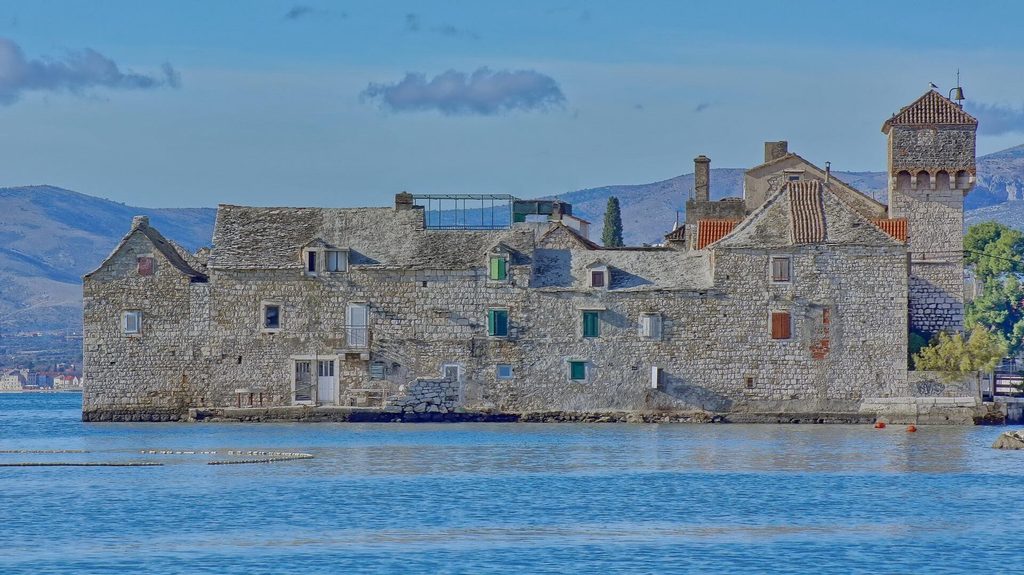
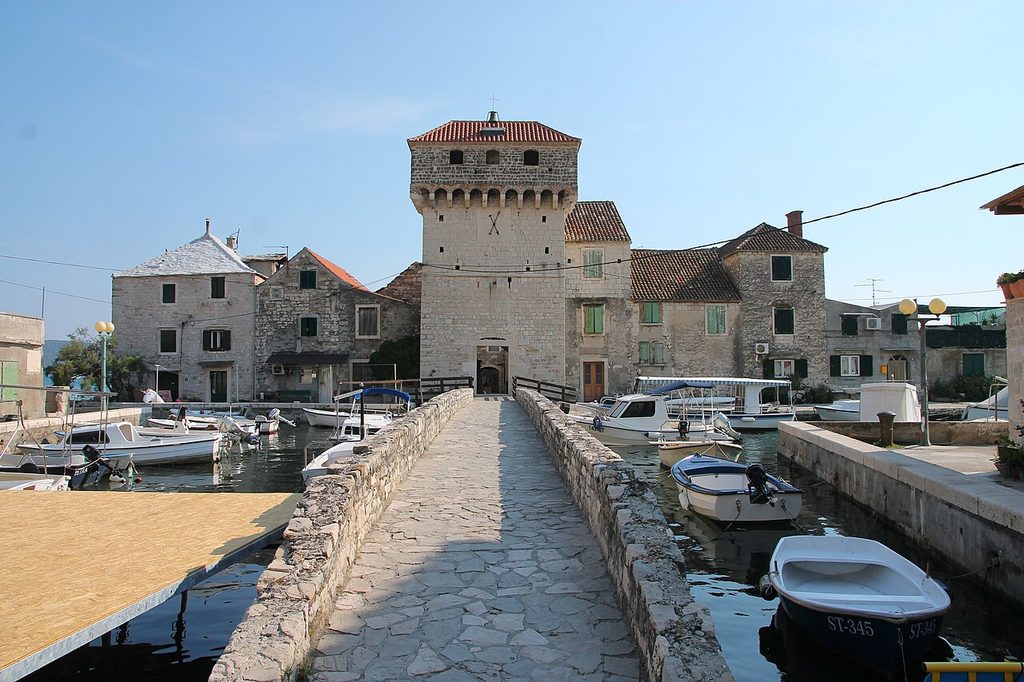
Kaštilac in Kaštel Gomilica was actually built on a shallow sea reef about forty metres from the mainland. It has a rectangular ground plan, a defensive wall and a high tower above the entrance. It is connected to the shore by a stone arched bridge; before that, a wooden drawbridge was lowered in front of the gate, according to the St. Jerome Association’s account of the place’s history. Sea gates have been preserved on the southern wall to this day, because in those times the fortress was most often reached by boat. The entire structure was commissioned by the women’s Benedictine monastery from Split.
The nuns’ connection with this stretch of coast is almost five centuries older than the fortress itself. In 1078 King Zvonimir granted the Split Benedictines an estate in the Kaštela plain (polje). In the 12th century they built the Church of Saints Cosmas and Damian there, on the foundations of an older necropolis and an early Christian building. In front of the church still stands a roughly seven-century-old sessile oak, linked to a legend about a king who rested beneath it.
benedictines from split owned the land
The estate also included a nearby village. Kozice is mentioned in documents as early as around the year 1000. Relations between the peasants and the monastery were tense enough that in 1287 they ended up in court, where the nuns were represented by Abbess Stana. For centuries, therefore, the nuns were landowners with their own tenant farmers, incomes and disputes, which explains why, in a moment of danger, they behaved like any other feudal lord of the period.
The danger arrived in the 1520s. Intense Ottoman raids drove the population from the foothills of Kozjak towards the sea, and Kozice was destroyed around 1532. The Benedictines reacted earlier. In January 1529 their representative Ludovik Cipico concluded a contract with Trogir masons Jakov Marković, Grgur Liunić and Pavle Zudenig to lay the foundations of a castle in the sea itself, at the place called Gomilica, with walls resembling those of the fortress of the Trogir nobleman Pavle Andreis Cipico.
the nuns decided to construct the fortress to protect the residents
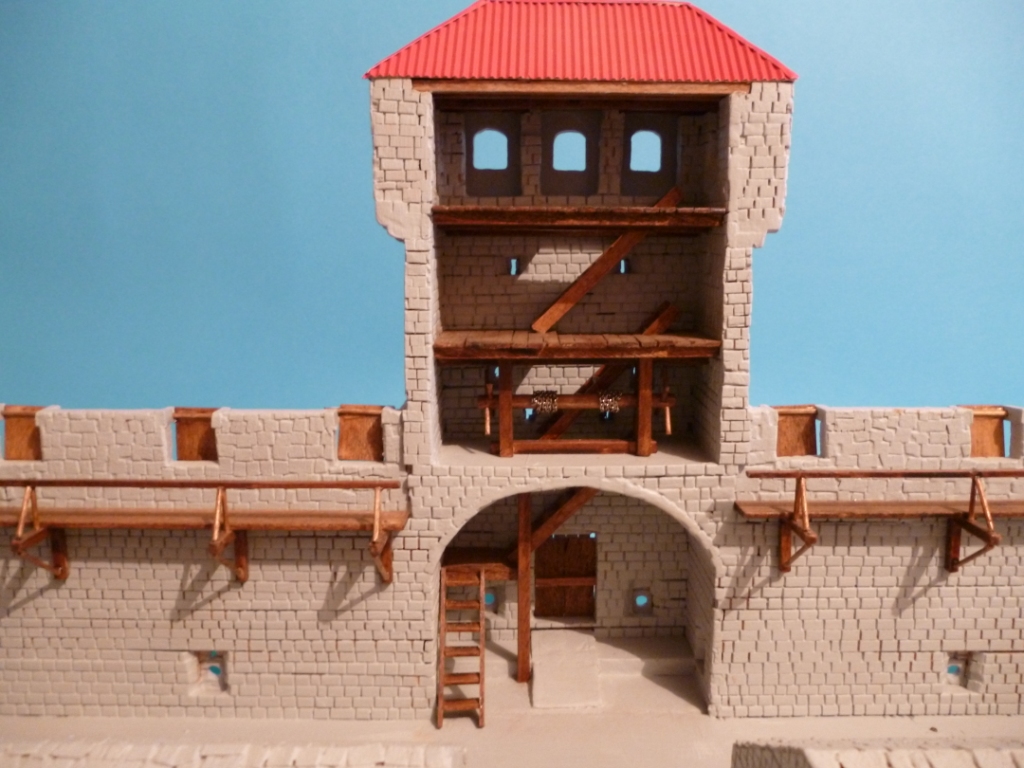
An earlier date in this long saga is also interesting. A mid-18th-century cadastre of the Split Benedictines’ plan of the castle has been preserved, along with a note that it was founded on the 26th of January 1513 by Abbess Jakobina Grisogono. That year is probably the year of the concession, the building permit, because the first traces of actual construction appear only in 1529. Sixteen years therefore passed between the approval and the start of building.
Construction was completed in around 1545. Kaštilac measured approximately 35 by 38 metres, and sixteen families settled within its walls, according to the account of the Parish of St. Jerome. The remaining inhabitants of the destroyed villages built houses along the shore, in the shelter of the fortress, and thus the settlement that for centuries bore the name Kaštel Opatica (Castle of the Abbess) came into being. The present name Gomilica comes from the reef on which the castle stands.
daily life continues in and around the fortress to this very day
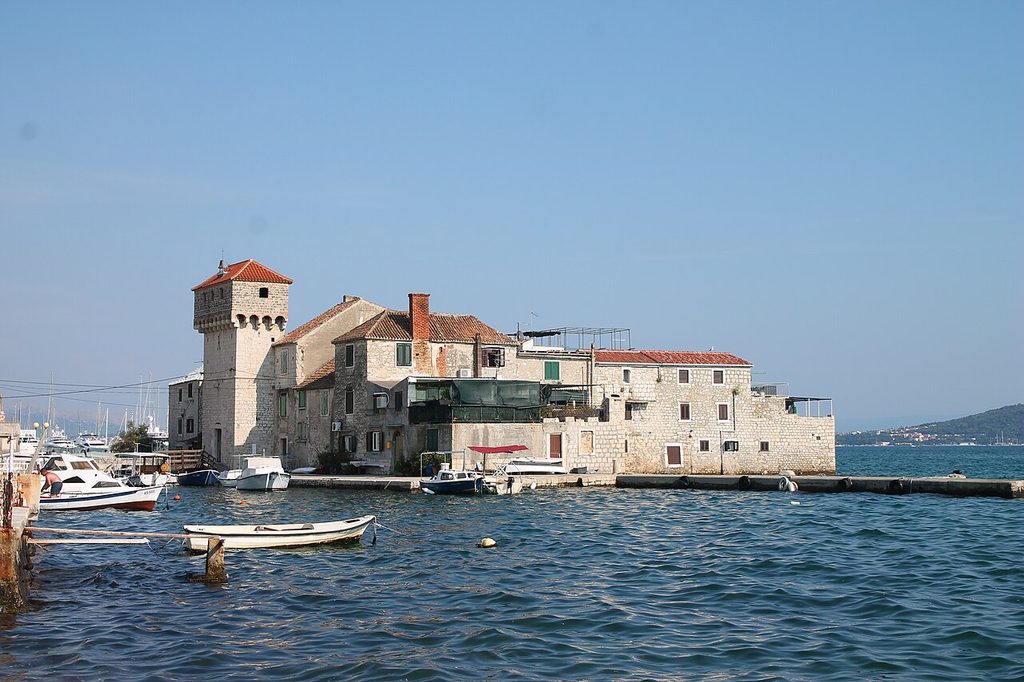
What distinguishes Kaštilac from most Dalmatian fortresses is its fate after its military purpose ended. People still live inside the walls; through a narrow passage one enters a courtyard around which houses are lined up, with laundry on the line and boats moored to the steps.
Yet the testimony to this special story of some “different” women is not highlighted on a monument or coat of arms, but has remained recorded in documents: the contract with the masons, the cadastral plan, and the list of families who entered within the walls. In other words, the fortress was not raised by lords for their own glory, but by women who had to protect their estate and the people who lived from it.