September the 20th, 2026 – There’s a Croatian bell tower hidden away in an old Istrian town which, on clear days, offers spectacular views into three different countries.
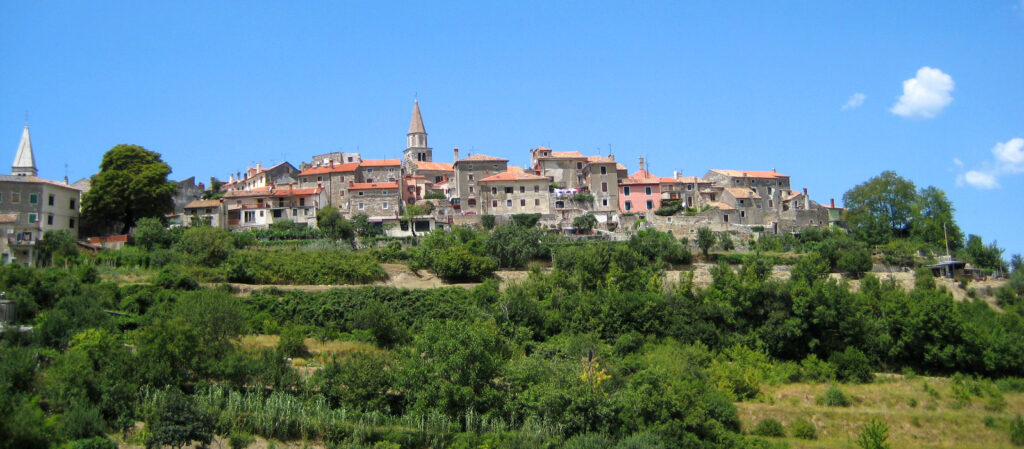
A trip to the gorgeous old settlement of Buje is a perfect combination of history, untouched nature and excellent gastronomy, and nearby are the Momjan castle and the unusual Istrian desert of Piski. Putni kofer/Ivana Vasarevic writes that for all their abundant beauty, very few parts of Croatia look as fairy-tale-like as the interior of Istria. Astonishingly beautiful towns surrounded by untouched nature never cease to delight us, and one of them is certainly Buje. Situated on a fertile hill, in the firm embrace of centuries-old vineyards and olive groves, this Istrian gem was already inhabited in the Bronze Age and today has around 3,000 inhabitants. It is only 13 kilometres from the crystal-clear Adriatic Sea (Umag), and the Slovenian border is also very close.
the guardian of buje
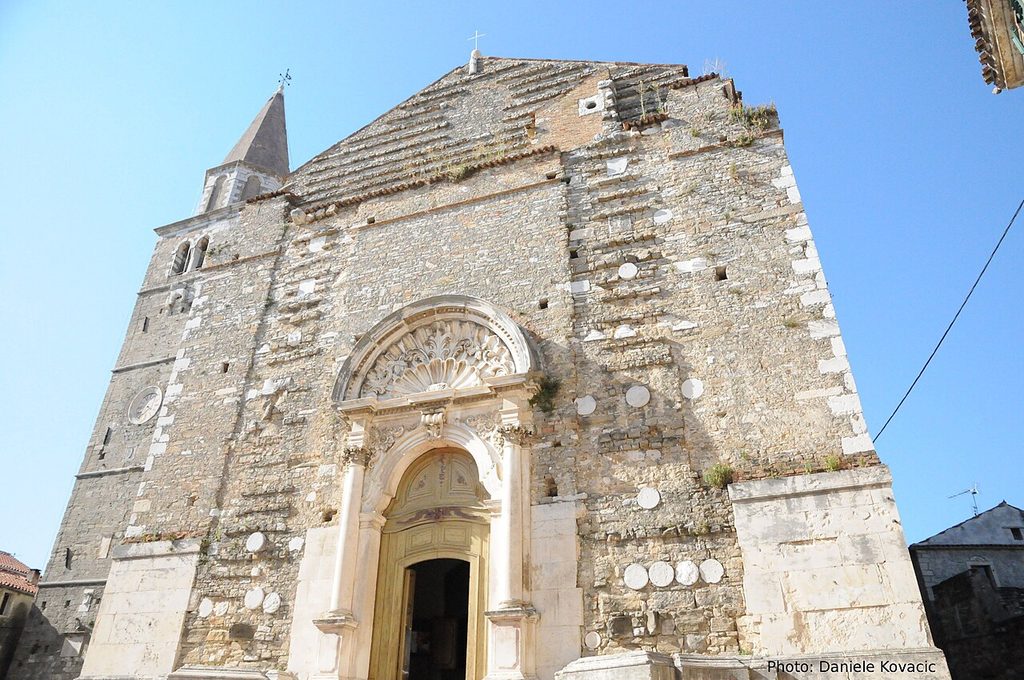
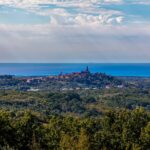
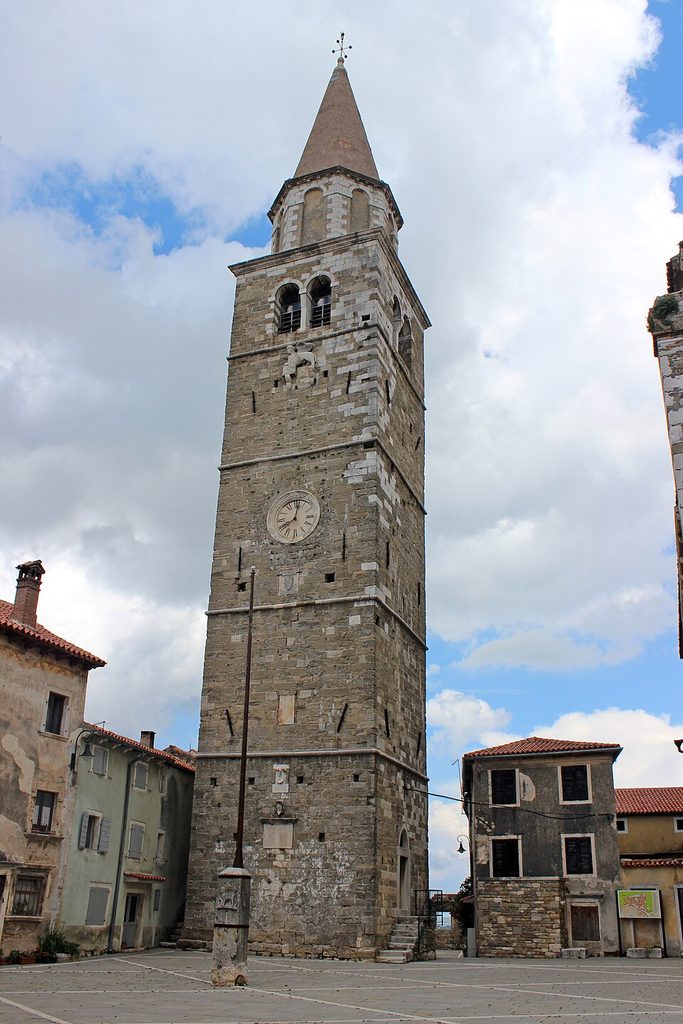
Its ancient population once lived in a fortified hillfort, of which there are as many as about 20 remains in Buje and the surrounding area! A labyrinth of paved streets full of charm will take you to the core of the old town and Freedom Square, where the magnificent Church of St. Servulus and the 15th-century bell tower will greet you. From it, in fine weather, there is a fantastic view of as many as three neighbouring countries: Slovenia, Italy and Austria. This beautiful bell tower is one of the tallest in Istria, and given that it stands at 222 metres above sea level, it was once a lookout and watchtower, so it received the nicknames guardian of the town and watch of Istria. In addition, its image also adorned the town seal from the 13th century.
IT wAS FIRST MENTIONED IN DOCUMENTS AS EARLY AS 981 AS CASTRUM BUGLE
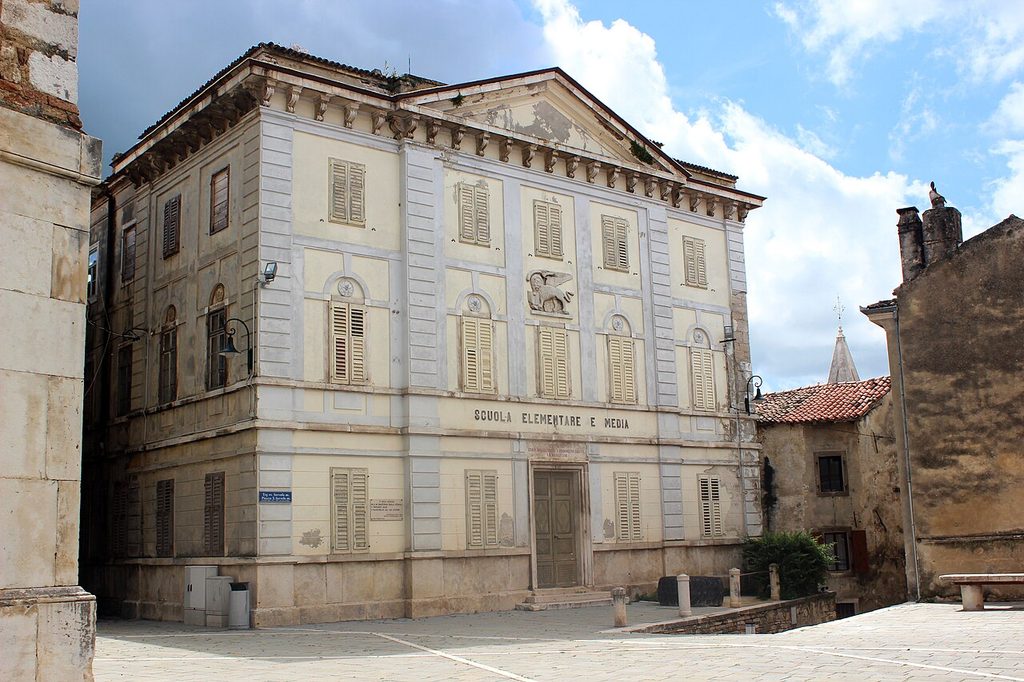
And there is also the bell tower that proudly stands next to the Church of Our Lady of Mercy (St. Mary of Mercy). It dates from the 17th century, is 22 metres high, is adorned with a clock, and at its base there is a characteristic passageway, opposite which is the ethnographic museum. At the same time, in the aforementioned church you can see the sculpture of Our Lady of Mercy, one of the most beautiful wooden statues in Istria. In the Iron Age, the wider area around Buje was inhabited by the Histri, the first documented people to settle on the Istrian peninsula, and the Romans also had their colonies in Terra Magica. In the Middle Ages a fortified medieval town developed, and it is first mentioned in documents, i.e. in a charter of the German-Roman Emperor Otto II, as early as 981 as Castrum Bugle.
THE MAGNIFICENT TOWER wAS ONCE PART OF THE VENETIAN WALLS

At the beginning of the 15th century the entire Buje area came under the rule of the Venetian Republic, and over the next four centuries the magnificent bell tower, the impressive Church of St. Servulus (the town’s patron saint) and the town loggia, which was located on Freedom Square, were built there. To this day, the Tower of St. Martin, which was part of the Venetian walls, has been preserved from that period. And after the fall of the once mighty Venetian empire in 1797, the French, the Austro-Hungarian Monarchy and the Kingdom of Italy successively ruled in Buje. After the end of the Second World War, the town and its surroundings ended up in the Free Territory of Trieste. Its status was settled only in 1954, when it was agreed that the northern part of the Territory, Trieste and the surroundings, would belong to Italy, and the southern part, including Buje, to the then Yugoslavia.
THE ETHNOGRAPHIC MUSEUM iS HOME TO AN OLIVE PROCESSING PLANT AND AN OLD BLACKSMITH’S WORKSHOP

If you find yourself in Buje, also take a look at the aforementioned ethnographic collection in the local museum, which preserves handicrafts of folk material culture from the entire Buje area. It is located in a magnificent four-storey building, and tools, furniture and everything that made up a typical old household, once oriented towards agriculture and ancient crafts, are exhibited in it. Down in the basement, you will find a blacksmith’s workshop and an old olive processing plant, i.e. a press, millstone and stone vessels with wooden lids in which olive oil was stored. Traditional Istrian cuisine and valuable pottery items are exhibited on the first floor, and the greatest attraction of this part of the museum is the hearth, the lifeblood of every Istrian household.
NEARBY LIE THE MEDIEVAL MOMJAN CASTLE AND THE ISTRIAN DESERT OF PISKI
The second and third floors are reserved for a loom and antique carved chests in which clothes and other personal items were kept. In addition to all of the above, the third floor is often used for occasional exhibitions of an ethnographic and historical character. Near Buje are also the picturesque settlement of Momjan with its imposing medieval castle above the Dragonja River and the Istrian desert of Piski, a unique natural phenomenon, i.e. marl dunes, one of the greatest attractions of northwestern Istria that really looks impressive.
tHE HOME OF BEER MISU!

And after sightseeing this magical little town, it is time to explore the wine and olive oil roads of the Buje area. Enjoy the delicious Istrian cuisine and excellent wines, but also the excellent local beer that has been produced since 2013 at the San Servolo brewery in Buje. Only four ingredients are responsible for its perfect taste: barley malt, hops, yeast and natural water from the St. John spring, which is located in the valley of the Mirna River. In the pub you can also taste dishes such as beer soup or beer misu.