May the 4th, 2026 – Kozada is a wild, uninhabited and tiny Croatian island that almost everyone bypasses. Home to a glorious landscape and military history, it has an interesting story to tell.
As Putni kofer writes, Kozada, often also referred to as Kotež, is a tiny uninhabited Croatian island on the very edge of the Brijuni archipelago, opposite Štinjan near Pula. Boasting a very interesting past, this island is now just an “untamed” and untouched part of one of the most beautiful Croatian archipelagos of all.
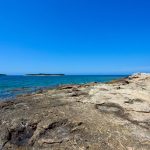
At first glance, it gives the impression of a typical piece of Croatian coast left to the elements. Low, rocky and eerily quiet, Kozada looks like nothing more than a wild lookout facing the city, but without the usual noise and crowds. However, behind this simple, almost ascetic nature lies an interesting layer of history, related to the period of the Austro-Hungarian Monarchy and the earliest days of global aviation.
turning the clock back to the austro-hungarian empire
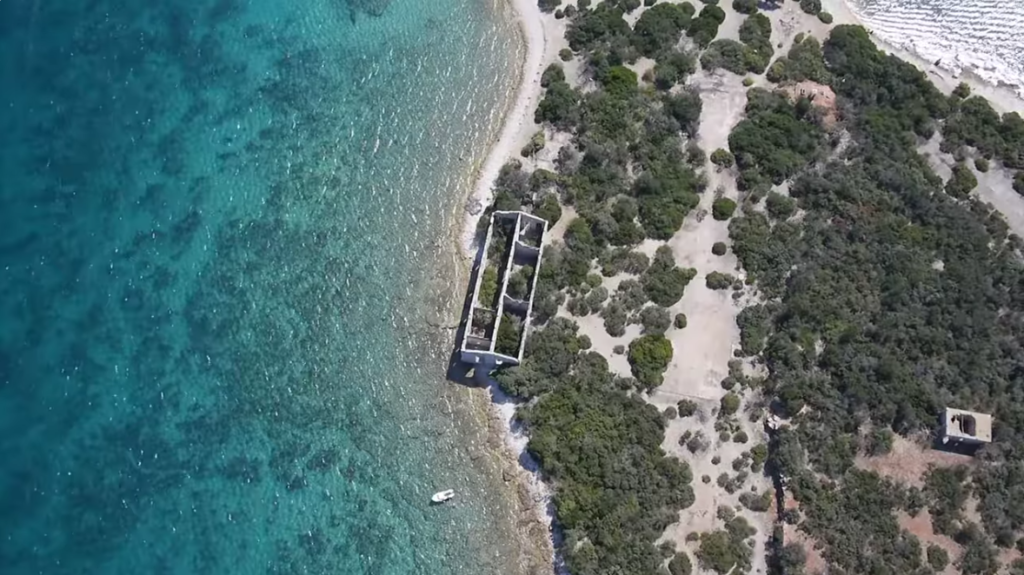
The period from 1913 to 1915, with the development of the Pula naval base, saw Kozada adopt a very important strategic role. Owing to its sheltered position near the Pula military port and the former naval infrastructure, the island became a seaplane station and a pilot training school. At a time when seaplanes were essential for sea surveillance and rapid communication within the Monarchy, such isolated but well-positioned points along the coastline were of great importance.
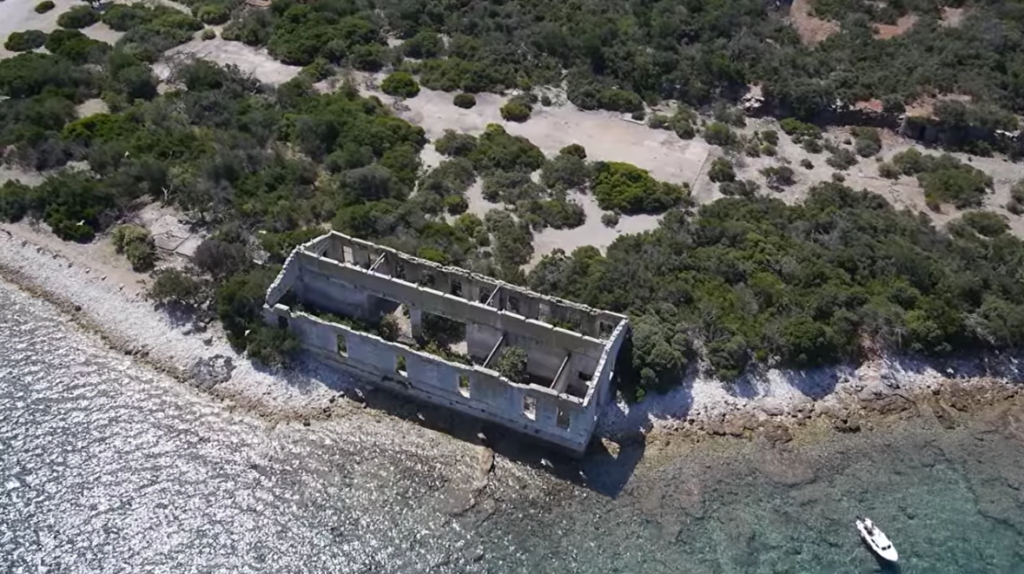
Kozada therefore became part of a wider military network that transformed the City of Pula into one of the most important maritime centres of the entire former Austro-Hungarian Empire. Today, those days are far behind us, but their traces are still present, albeit discreet and almost hidden. In the dense Mediterranean vegetation that covers the island, the remains of the former seaplane station can still be seen: ruined walls, the overgrown structure of a military facility that almost plunges into the depths of the surrounding sea, and fragments of former military infrastructure.
It’s precisely this unobtrusive presence of the past that gives Kozada its truly special character. There are no interpretive panels or well-maintained routes; history is hinted at only at first glance and beckons those passing to disembark and explore – though few ever do. Care must be taken on Kozada. Although the seaplane station looks interesting and photogenic, its walls are actually very unstable and are no place for climbing.
kozada: brijuni’s untouched but tiny haven
Unlike the much more developed parts of the stunning Brijuni National Park, Kozada remains raw and almost untouched. Visitors to this location typically arrive by boat from Pula or nearby Štinjan, staying for a short time: swimming, diving and exploring the coastline. This island isn’t a destination that impresses with its content, but quite the opposite, its uniqueness lies in the fact that it contrasts with everything you’re used to seeing on most Croatian islands.
Kozada’s rich diversity is also particularly striking. Between the technology that once connected the sea and the sky and today’s silence in which only the sound of the wind and waves can be heard. There’s no typical beach where you come with towels, an umbrella and spend half a day there without thinking about anything. Kozada is raw, a bit wild and requires more caution, not to mention plenty of your own water and some food.
Add to that the fact that the island is quite bare, it will be difficult to find a place in the shade to take a break from the harsh Croatian sun, making the glare and temperatures merciless on long, boiling summer days. The best tactic is to arrive early in the morning or much later in the afternoon, stay for a few hours for a swim and a bit of short exploration, then move on. Kozada works much better (and is much safer) as a stopover than as a place to stay all day.
a living reminder of when this part of the adriatic held enormous military importance for an empire
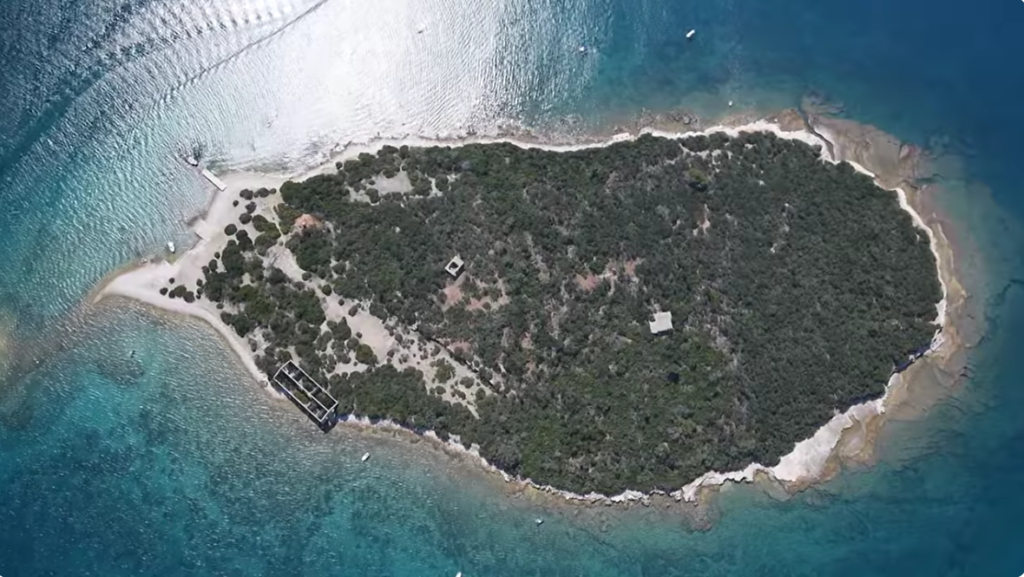
Another thing you don’t want to underestimate is the island’s very harsh terrain. There are no proper paths, no flat surfaces, and no man-made help. If you come with small children, expect to be carrying them most of the time. The simplest plan is also the best one, anchor, swim if the weather is suitable for it, take a short walk around and then get back to the boat rather quickly.
This island needs to be approached with a prior understanding of its very particular location and history, Kozada is not just a place to swim and relax. It’s living evidence, a forgotten reminder of a moment when the Adriatic was part of a much larger, more ambitious story and when the first pilots learned to take off from the sea.
Subscribe to our newsletter
the fields marked with * are requiredRelated posts:
 Resort, Luxury Lifestyle Destination or Park? Unclear Future for Brijuni
 Dinosaur Fossils in Croatia and their Locations Declared Protected Part of Nature
 Brijuni National Park Becomes Blue Park for Marine Conservation and Management
 After 18 Projects Worth 50 Million Kuna, Brijuni E-Mobility to Come Next