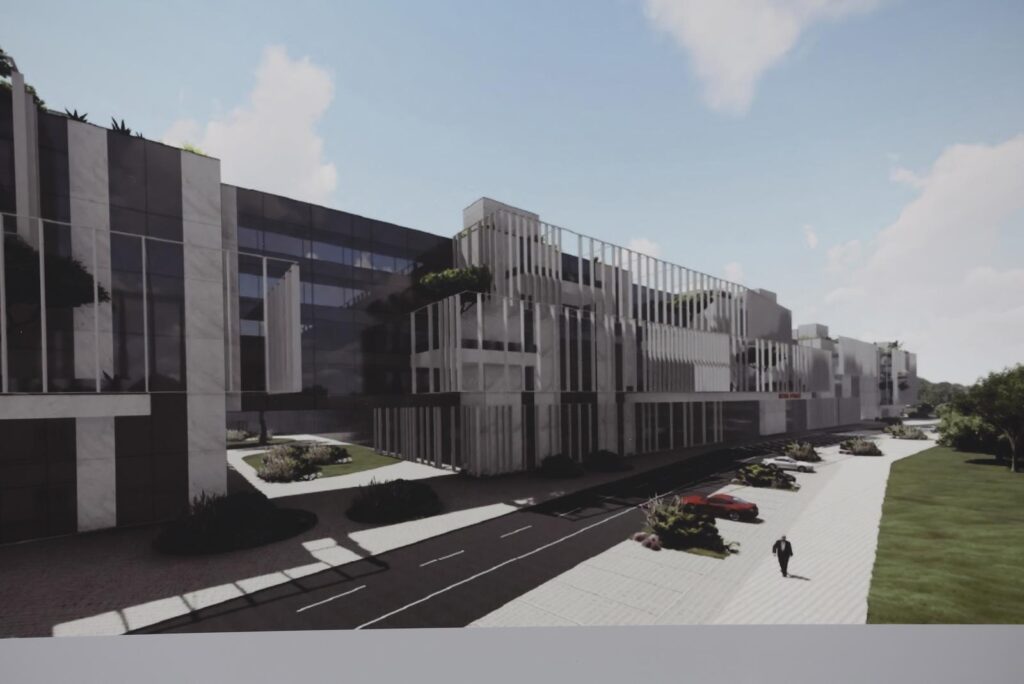
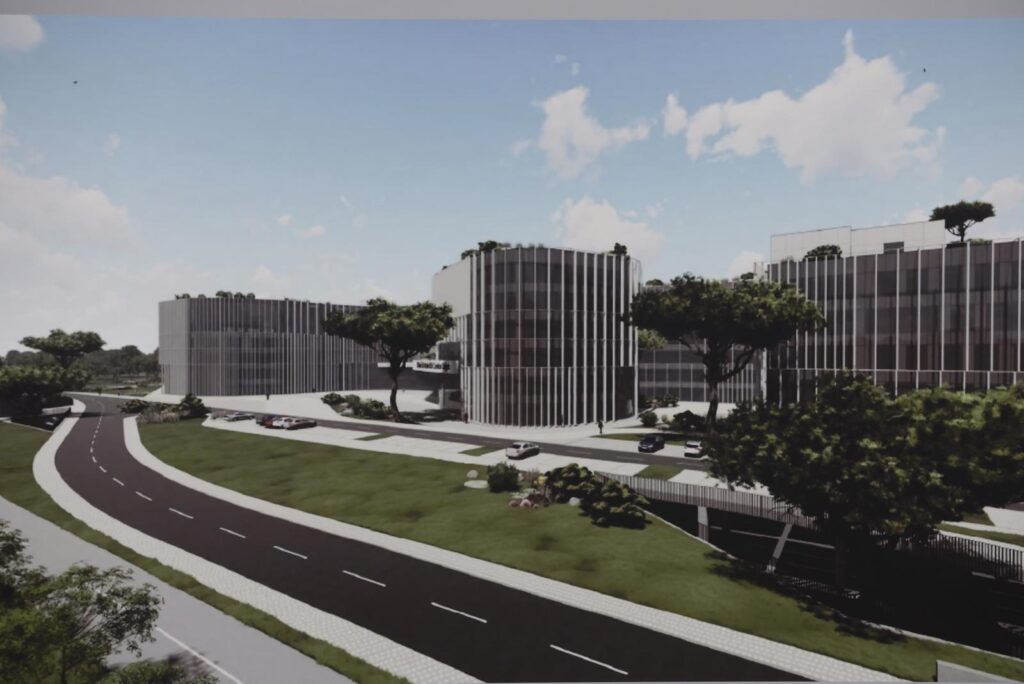
March the 4th, 2026 – A massive 850 million euro investment will result in a sprawling, brand new Osijek Hospital being hailed as a “dream facility”.
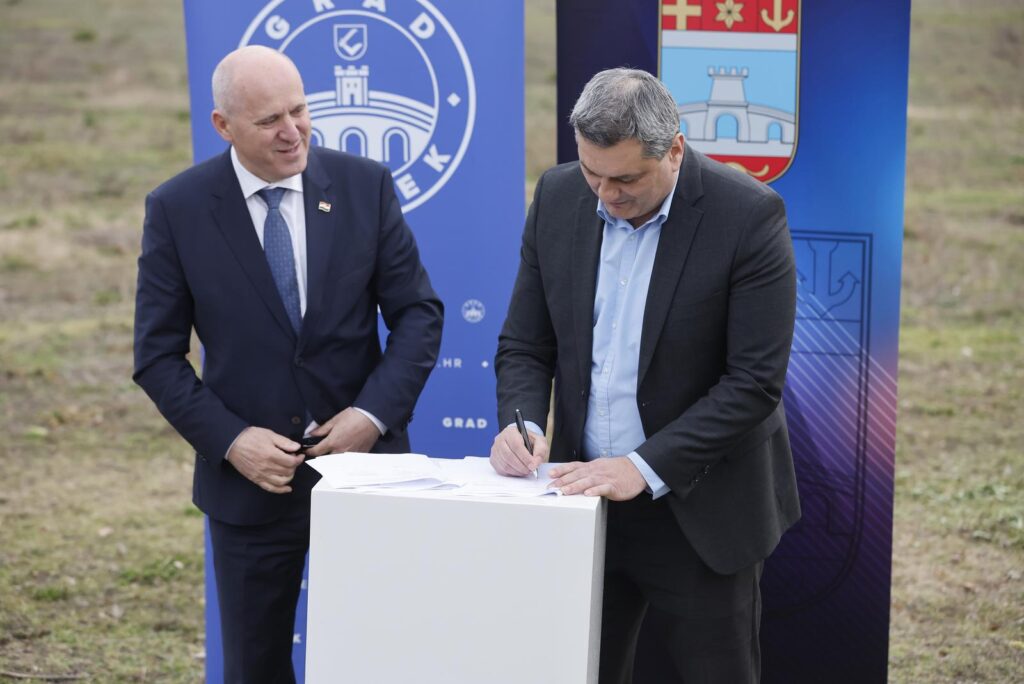
As Poslovni Dnevnik/VL/Karolina Lubina writes, the future Osijek Hospital will span an area of 215,000 square metres, which is equal to the area of the entire Osijek Tvrđa, for which the state donated land recently. A contract was signed in Osijek on the donation of 120,000 square meters of state-owned land for the construction of a new, modern hospital, in which more than 850 million euros will be invested. The signing of the contract was attended by Krunoslav Šego, director of KBC Osijek, Ivan Radić, mayor of Osijek, Nataša Tramišak, Osijek-Baranja County Prefect, and Spatial Planning Minister Branko Bačić.
an 850 million euro investment in an ultra-modern osijek hospital
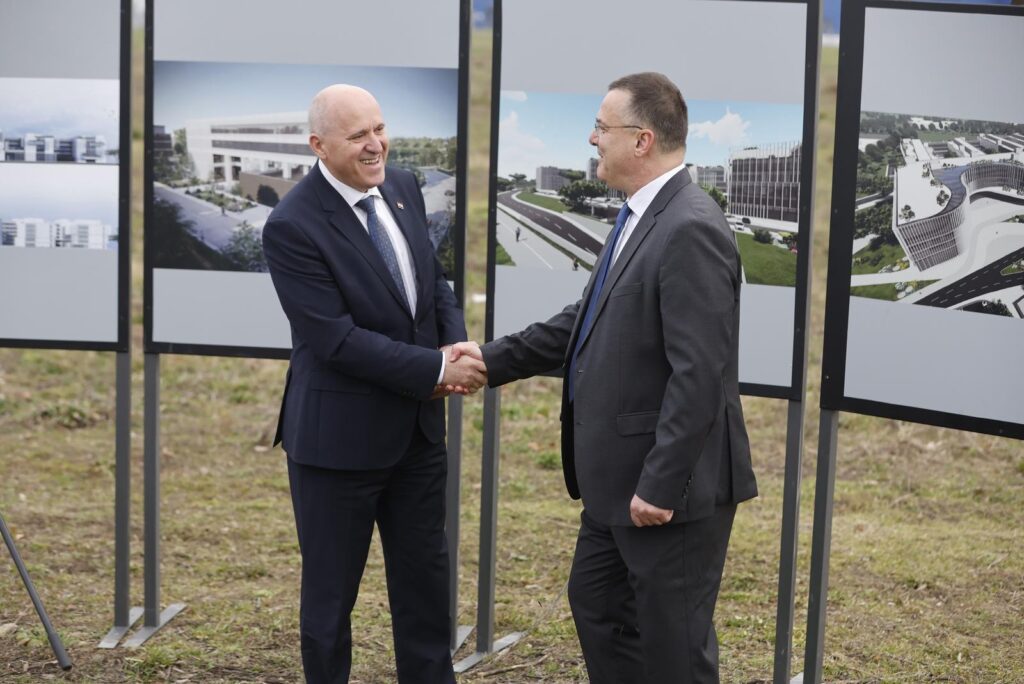
“We’ve now successfully completed the first, administrative phase and are paving the way for what we’ve all been waiting for a very long time – the start of construction,” emphasised Minister Bačić. Osijek Mayor Ivan Radić added that this is a project that will define the future of the entire city: “This isn’t just a hospital, this is a project that will define the quality of life in the city for the next 50 to 100 years.”
The future Osijek Hospital complex, the total value of which is estimated at over 850 million euros, is a dire need, as was emphasised by its director Krunoslav Šego. “This isn’t a megalomaniacal project at all, this is a dire need for the Osijek area. The existing hospital has been operating at this location for 150 years. Modern 21st-century medicine simply cannot be founded, nor can it properly progress in such old buildings,” Šego explained.
“To give you an idea of the scale of the project, I can tell you that the entire complex spans an area that corresponds to 30 football pitches. It’s going to be a city within a city,” revealed Mayor Radić. This imposing complex will become the centre of healthcare for almost a million people who gravitate to Osijek for all sorts of treatment.
obstacles have been being tackled since 2012
The idea of a new Osijek Hospital was launched back in 2012. “Since 2017, intensive work has been underway to prepare all of the necessary documentation and resolve all sorts of complex property and legal relations,” explained Osijek-Baranja County Prefect Nataša Tramišak. She especially thanked Minister Bačić: “I must thank the minister who truly promptly resolved the problems that had been holding up this whole story for years now. Without that determination, we simply wouldn’t be here today.”
The minister himself confirmed that all the prerequisites for this 850 million euro investment and the actual construction of the new Osijek Hospital have now been met. “I can proudly say that the construction permit became final in mid-January. Now comes the government’s conclusion on the financing model, worth 854 million euros in total, after which, the future Osijek Hospital can initiate the public procurement procedure,” said Bačić. According to optimistic estimates, construction could take around four to five years.
osijek’s changing landscape
This project is just one in a series of major investments that are dramatically altering the landscape of Osijek and the surrounding area. This entire eastern area of Croatia has lagged terribly behind the rest of the country’s progress, with this being a huge step forward. “The future Osijek Hospital is going to become the crown of all of the many investments that are changing Osijek. With 206 POS apartments worth 28 million euros, the expansion of the Nemetin Economic Zone by 36 hectares and the resolution of the land exchange for the Unikom company, we’re showing that we’re currently busy building the Osijek of the future,” stated Mayor Radić.
In addition, contracts were also handed over on the donation of land for the construction of sorting facilities for the Orlovnjak Regional Waste Management Centre, worth a total of 118 million euros, which will advance the county towards a green transition, a circular economy and responsible resource management. The total value of these two projects amounts to almost one billion euros.