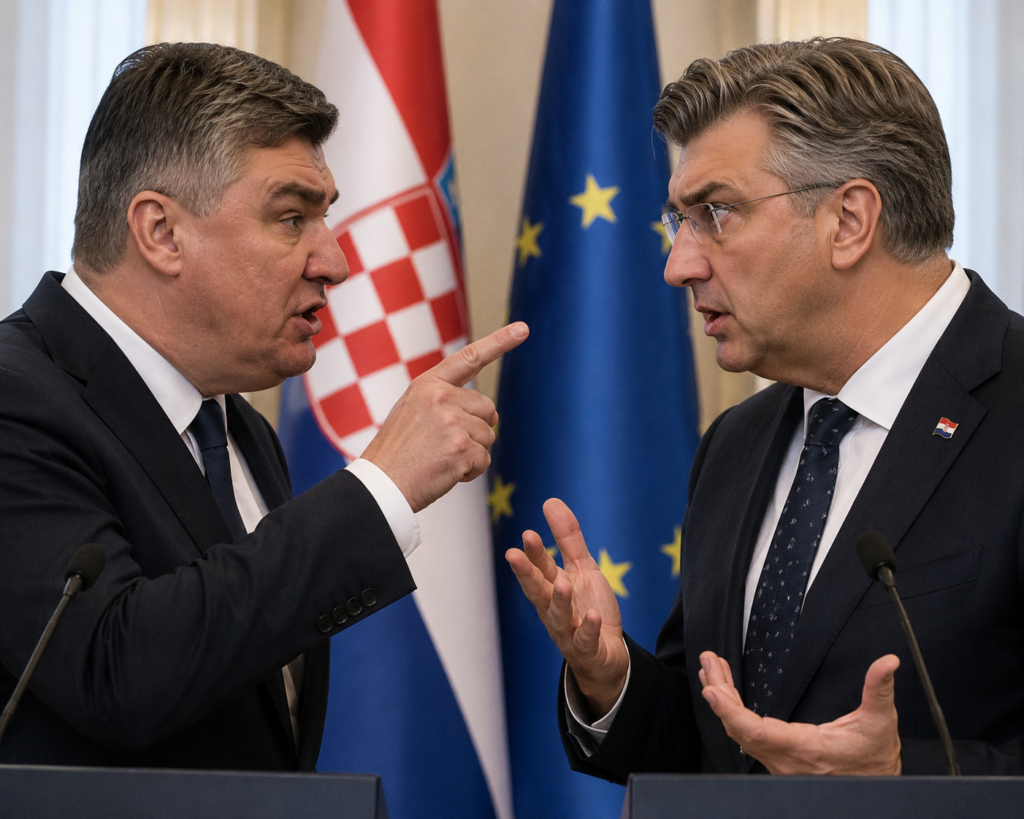
July the 1st, 2026 – One Croatian politician has stated that the ongoing conflict between President Zoran Milanović and Prime Minister Andrej Plenković is damaging Croatia’s reputation and could result in the world not taking Croatia particularly seriously.
Croatian politician Urša Raukar-Gamulin has criticised the ongoing political conflict between President Zoran Milanović and Prime Minister Andrej Plenković, saying that their repeated public clashes are harming Croatia’s image and international reputation.
According to Index, Raukar-Gamulin said that disagreements between the country’s very top officials are normal in a democracy, but she argued that the constant public disputes and personal attacks have gone far beyond ordinary political debate. According to her, such conflicts create a negative impression of Croatia both at home and abroad.
The latest tensions between Milanović and Plenković have continued over several issues, including disagreements about foreign and defence policy. Their public exchanges have often included sharp criticism from both sides, adding to a long-running political rivalry between the president and the prime minister.
Raukar-Gamulin warned that when the highest state officials spend their time fighting publicly instead of cooperating on important national issues, it weakens trust in institutions and distracts from problems that require solutions.
She also emphasised that Croatia needs stronger political responsibility and communication between its leaders, especially when representing the country internationally. In her view, disagreements should be handled through institutions rather than through constant public confrontations.
The relationship between Milanović and Plenković has been marked by repeated disputes during their time as president and prime minister, with both sides frequently criticising the other’s decisions and approach to governing.
The latest comments have once again raised questions about whether Croatia’s two most powerful political figures can find a more cooperative way of working together, or whether their conflict, which is always will continue to dominate public attention.