August the 4th, 2026 – Croatian high-tech trains are the domestic innovation transforming rail transport as the country enters a new era of railway transport.
As Sinisa Malus reports for Poslovni, that era is being strongly driven by one of the country’s most advanced industrial achievements – modern trains developed and produced by Končar.
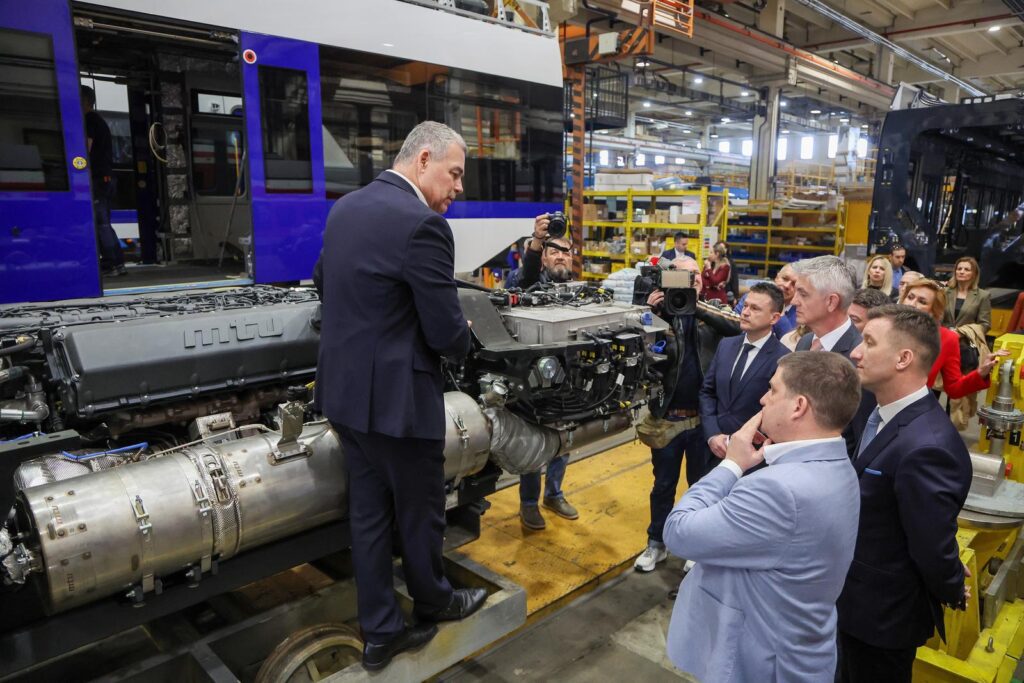
Often described as among the most complex technological products created by Croatian industry, these new-generation trains represent a combination of domestic engineering, advanced technology and a push towards greener transport solutions. Over 70 percent of their components are Croatian-made, while key systems and subsystems, including control systems, communication technology, traction transformers and other essential elements, are produced within the Končar Group.
To date, Končar has delivered 70 new-generation low-floor trains to Croatian railways, including 40 units delivered in less than five years. The company has also recently signed new agreements with HŽ Passenger Transport for six battery-electric trains and the construction of a hybrid charging station in Kotoriba, with a total value of 53.6 million euros.
Croatia’s first battery trains enter service
One of the biggest milestones has been the development of Končar’s battery-powered trains, which represent a major technological step for Croatia and one of the first examples of this type of commercial railway technology in Europe.
The battery-electric multiple unit (BEMV) uses fully electric propulsion, powered by onboard batteries as well as existing overhead electrical networks. This makes it particularly suitable for Croatia, where a significant part of the railway network is still not electrified. This type of technology allows the trains to operate on both electrified and non-electrified routes, creating a more sustainable solution for passenger transport across the country.
The train was designed for daily operation of up to 480 kilometres and up to 18 hours of service per day. On non-electrified lines, it can reach speeds of up to 120 km/h using battery power, while on electrified routes it can achieve speeds of up to 160 km/h. Another highly important innovation is the battery motor train (BMV), designed specifically for routes without overhead electrical infrastructure. It can reach speeds of up to 120 km/h and, depending on conditions, can travel more than 200 kilometres during testing on a single charge.
Designed for modern passengers
The new trains are not only focused on efficiency and sustainability but also on improving passenger comfort. They include wheelchair access ramps, dedicated bicycle spaces, accessible toilets, video surveillance, passenger information screens, audio announcements and free Wi-Fi. The trains can also be connected with other new-generation low-floor units already operating in Croatia, allowing increased capacity when needed.
A major investment in greener mobility
The development of these trains is part of the project “Application of Green Technologies in Railway Passenger Transport”, financed through Croatia’s National Recovery and Resilience Plan. Several charging stations have already been opened at railway stations in cities including Split, Osijek, Varaždin, Bjelovar, Virovitica and Pula. Further expansion is planned, with additional battery and hybrid trains expected to enter service in the coming years. A wider project financed through a European Investment Bank loan, worth almost €118 million, includes the delivery of additional trains and charging infrastructure.
New trains to connect Zagreb and Split
Končar is also preparing a new generation of long-distance trains that will connect Zagreb and Split.
The route between the two cities stretches for 429 kilometres, but only around a quarter of the line is electrified. Because of this, the new trains will combine electric and diesel propulsion, allowing them to operate efficiently across different sections of the route. The trains will reach speeds of up to 160 km/h and will be capable of connecting multiple units together to increase capacity. The first six trains are part of a larger agreement between Končar and HŽ Passenger Transport covering 19 new low-floor trains. Additional units are planned to connect cities including Osijek, Rijeka and Pula.
Croatian engineering on the international stage
The latest generation of Končar trains highlights the growing role of Croatian industry in advanced manufacturing and sustainable technology.
From battery-powered rail vehicles to modern mobility solutions, these projects show that Croatian companies are capable of developing complex products that compete in a highly demanding global market. As railway transport across Europe moves towards lower emissions and smarter infrastructure, Croatia’s domestically produced trains are becoming a symbol of innovation, engineering expertise and the country’s ambitions beyond traditional industries.