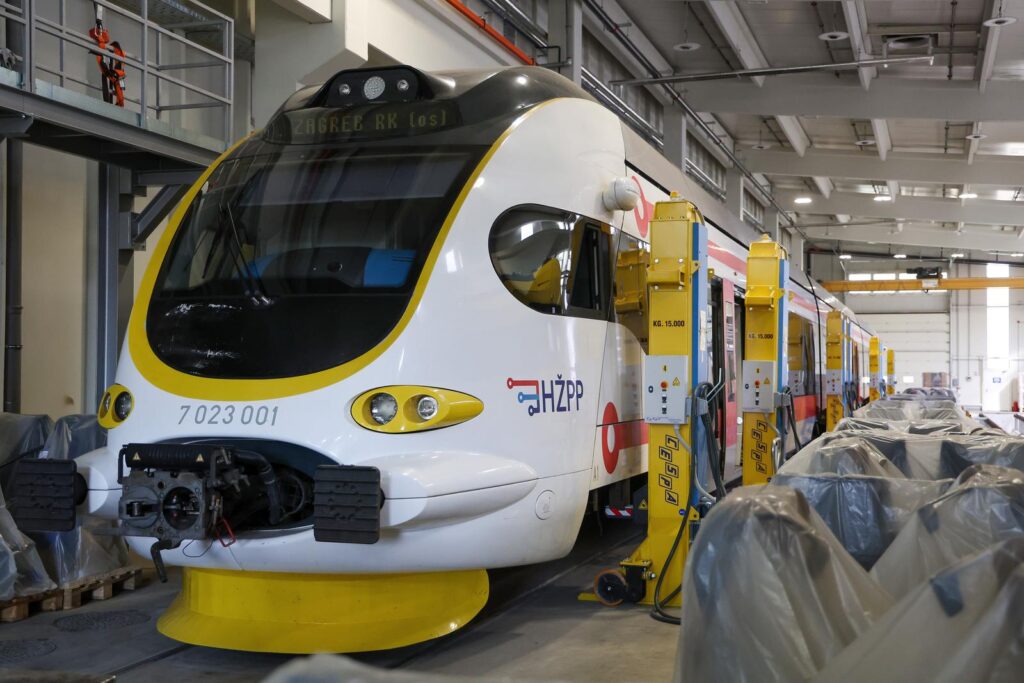
June the 6th, 2026 – The Croatian railway revival isn’t exactly underway yet, but the momentum is building in the form of various pricey investments and infrastructure upgrades, but will trains ever compete with cars?
For years, Croatia’s rail network has been the subject of promises, plans, and ambitious investment announcements. Yet for many travellers, trains remain associated with slow journeys, ageing infrastructure, and long delays.
Now, with significant EU funding flowing into railway modernisation projects across the country, hopes are growing that Croatia could finally be entering a new era of rail transport.
Over the past decade, the focus of transport investment has largely been on roads and motorways. Croatia built one of the most extensive motorway networks in the region, helping transform domestic travel and strengthen connections between the interior and the coast. Railways, by comparison, often struggled to keep pace.
That’s all slowly but surely beginning to change.
Major upgrades are currently underway or planned on several strategic rail corridors, particularly those connecting Zagreb with key European transport routes. Projects include track modernisation, signalling improvements, station upgrades, and infrastructure designed to support faster and more reliable services.
The long-term goal is not only to improve domestic travel but also to strengthen Croatia’s position within wider European freight and passenger networks.
Supporters argue that rail investment is becoming increasingly important as European countries seek to reduce emissions, improve mobility, and provide alternatives to road transport. Faster rail connections could also help reduce congestion on major highways while offering more sustainable travel options.
However, challenges remain significant.
Many parts of Croatia’s rail network still require substantial investment, and modernisation projects often take years to complete. Passengers continue to report frustrations with journey times and service reliability, particularly on routes where upgrades have yet to be carried out.
There is also the question of public perception. After decades of underinvestment, convincing travellers to switch from cars to trains may prove just as difficult as building the infrastructure itself.
Yet momentum appears to be building. Across Europe, rail travel is experiencing renewed interest, driven by environmental concerns, rising fuel costs, and growing demand for alternatives to short-haul flights. Croatia is increasingly looking to position itself within that broader trend.
For tourists, improved rail services could eventually provide easier access to destinations across the country. For businesses, modern freight connections could strengthen competitiveness and improve links with European markets.
Whether Croatia’s railway revival ultimately succeeds remains to be seen, and it’s all more than likely (in true Croatian fashion) to take many years, or decades, to finish. It must be said however that after years of being overshadowed by widely commended roads, rail transport is once again becoming part of the national conversation.
The challenge now is turning investment plans into faster, more reliable journeys that can persuade Croatians to leave their cars behind and give trains another chance.