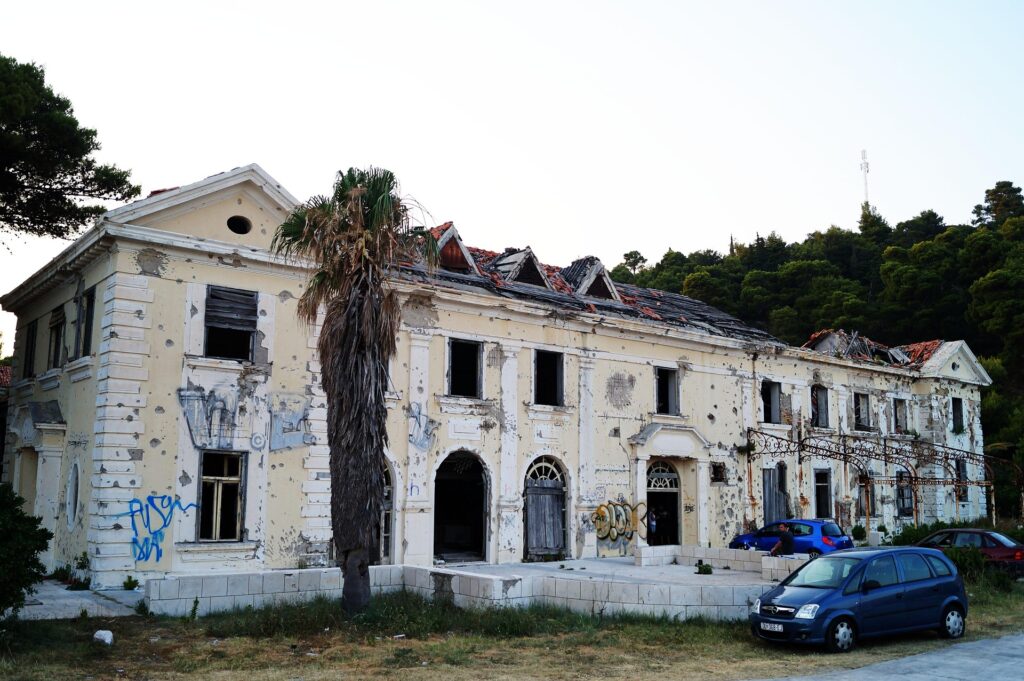
April the 28th, 2026 – Kupari, located not far from the glam of Dubrovnik, has quite the story – one that ranges from former Yugoslav luxury to featuring on the channel of the biggest YouTuber, Mr Beast.
As Index/Dubravko Grakalic writes, Kupari was a shining symbol of tourism in the extreme south of Croatia for decades. After the destruction that ravaged the area following the Homeland War and looting throughout 1991, it became an emblematic example of the new-found independent Croatia’s infamous slowness in reconstruction and privatisation.
croatia’s infamous slow pace turns the ruined hotel into a film set
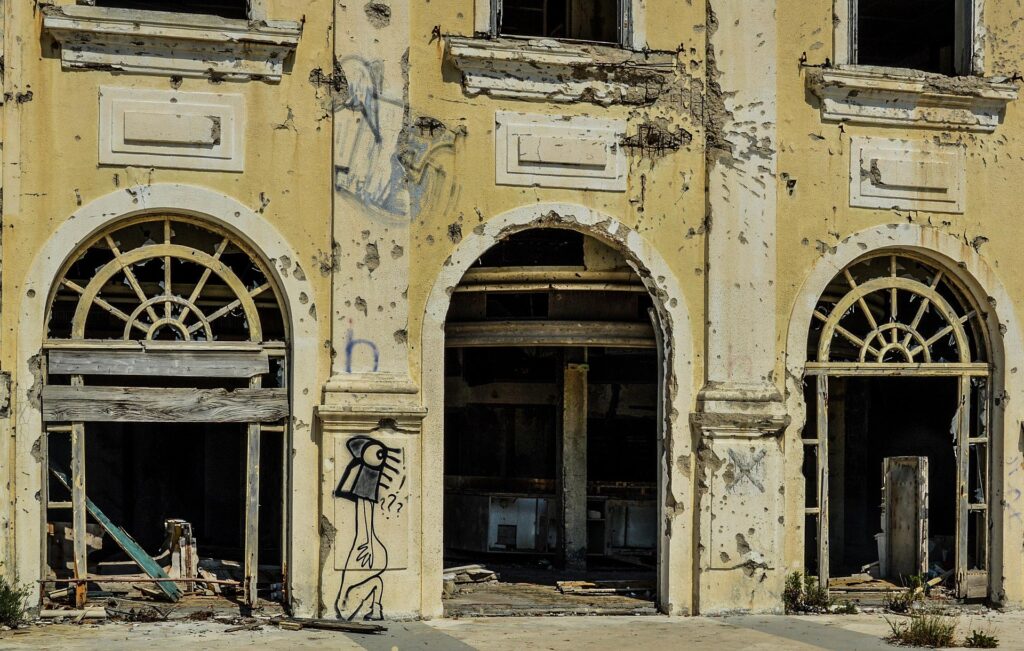
The renovation of the massive Kupari complex began with the demolition of the remains of the old hotels only last year, and it isn’t yet known when the Singaporean investor, whose minority partner is former minister Ivan Paladina, will complete the luxury tourist resort project.
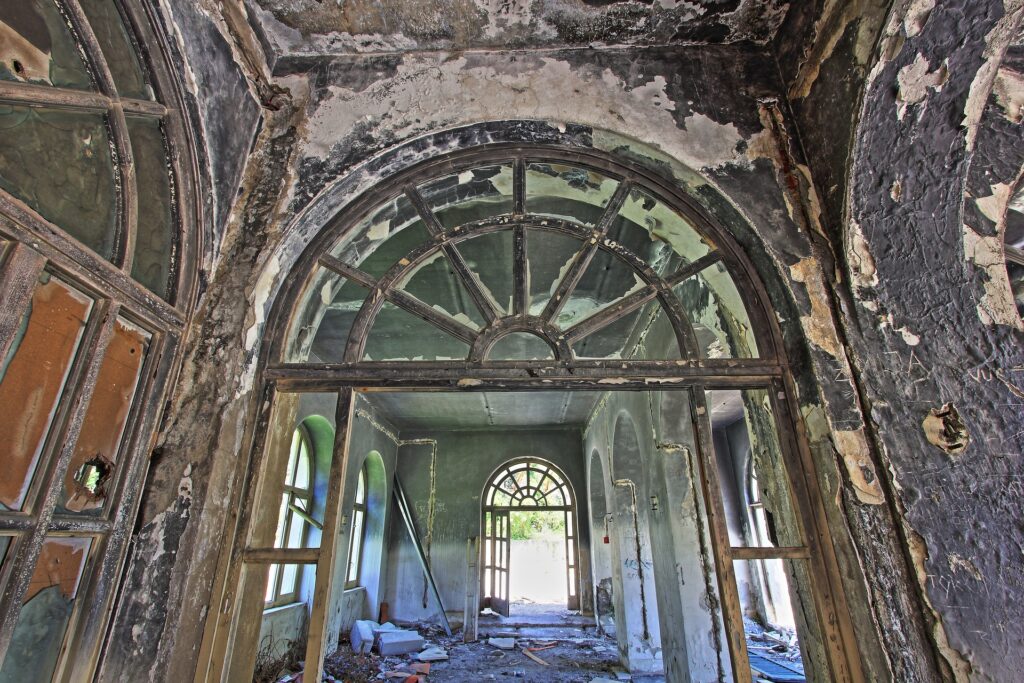
Kupari’s ruins became the backdrops for the films “The Weekend Away” in 2002 and “Lee” with Kate Winslet in 2003, and is a place visited by many explorers of the ruins. One of them is James Donaldson, the most famous YouTuber in the world. Known to hundreds of millions as Mr Beast, he posted a video on YouTube called “I Survived 7 Days in an Abandoned City”
kupari features on mr beast’s enormous channel
Kupari became a tourist destination over a century ago when the brickworks that once stood there began to be replaced by fancy hotels.
The history of the Kupari tourist complex clearly shows how important this entire area was for the development of Župa dubrovačka and the wider Dubrovnik area. Back at the beginning of the 20th century, more precisely in 1911, Kupari’s tourism story began with the arrival of the first investors, and in 1921, the first Strand hotel opened, followed by the construction of the Grand Hotel.
At that time, almost 90% of the population in the wider Dubrovnik region was engaged in agriculture, so the development of tourism in Kupari represented a turning point and the beginning of the economic transformation of this area from agricultural to touristic. It was then that Kupari turned into “a complete tourist complex.
“Its allure is visible in the 1932 Czechoslovak film ‘Právo na hříč’ (The Right to Sin) directed by Vladimir Slavínský, where it represents one of the key locations of the film,” stated Ivan Lujo from the Dubrovnik Red History Museum.
Between the devastation of two world wars, Kupari became one of the largest and most well-maintained hotel complexes in the entire Dubrovnik area, with its own infrastructure and highly organised tourist content.
stunning architecture left to the cruel hands of time
After 1945 drew to a close, the history of the hotel company became somewhat unusual. “With the introduction of a new system after WWII, numerous foreign-owned hotels were nationalised, but Kupari remained owned by a Czechoslovak company and continued to operate. The crucial change occurred as a result of the conflict with the Informbiro in 1948. At that time, the property of socialist countries was also nationalised, so Kupari became state property. The very next year, in 1949, Kupari was declared a resort of national importance and belonged to the Ministry of National Defence. It continued to operate as the Kupari Catering Company and turned into an exclusively military resort under the direction of Sarajevo,” they explained from the Red History Museum.
a resort for the yugoslav people’s army (jna)

Architect Božo Benić, a doctoral student at the postgraduate doctoral scientific study programme at the Faculty of Architecture in Zagreb, whose narrow field of scientific interest is modernist hotel architecture, revealed more: “Back during the 1950s, catering and hospitality facilities began to separate into independent economic organisations. The complex in Kupari (in the meantime renamed the Catering Company ‘Plavi Jadran’ Kupari – Dubrovnik) became a resort for providing such services to members of the Yugoslav People’s Army (JNA). The resort retained this purpose up until the early 1990s.”
In the following years, new and more luxurious facilities were built, which occasionally even hosted Josip Broz Tito.
“That’s when the young and very talented Sarajevo architect David Finci entered the scene, thanks to whose vision the first major modernisation and urban-architectural transformation of Kupari would begin. In 1958, Finci drafted the first investment programme for the construction of the ‘Plavi Jadran’ Military Resort in Kupari with all of its accompanying urban-architectural solutions and conceptual designs for as many as seven buildings,” explained Benić.
the sprawling kupari complex and appeals to retain some structures
“Not all of this architect’s projects were realised, but those that were can undoubtedly be included among the most stand-out achievements of modernist architecture in Croatia and the immediate region. The first hotel he built, the Hotel Goričina with a coffee shop and lounge bar from 1962, earned the author the 6th of April Award for Architecture from the City of Sarajevo. However, Finci’s most significant work in Kupari is certainly the Hotel Pelegrin, which began operating a year later,” Benić noted.
“The Hotel Pelegrin is a unique and nnovative architectural work, the aesthetics of which are undoubtedly in line with the international trends of the era. Back in 1963, when it was constructed, the hotel was the largest in terms of volume and capacity on the whole Adriatic, and critics immediately described it as a rare architectural work that, from the design to the excellent execution, stands far above the Yugoslav average as a unique contemporary object in terms of concept, function, material and expression,” Benić stated.
David Finci then moved to America, where he enjoyed a fantastic and lengthy career.
Benić believes that the demolition of the Pelegrin Hotel last year was a totally wrong move: “Of course, it isn’t necessary to protect all hotels and all modernist architecture, but in Croatia, there have been several canonical works that should have been protected more or less in their original state. The Pelegrin Hotel was certainly among them, and as such it didn’t interfere at all with the future development of Kupari, where there’s plenty of space for various forms of new interventions. However, the hotel was demolished, despite all the appeals and attempts by the scientific and professional community to protect it.”
the most significant tourism investment in southern croatia
In the late 1970s, “civilians” also began spending holidays in the resort, and the capacity increased to 2,000 beds. The Kupari complex, which is currently being renovated according to a design by the Zagreb-based architectural office 3LHD, is the largest investment in tourism in southern Croatia.
“Today, we don’t view the investment of around one hundred million euros in the renovation of Kupari as a milestone in development, but as its continuation and upgrade. Circumstances have changed significantly, and Župa dubrovačka is now one of the wealthier municipalities with the lowest unemployment rate in Dubrovnik-Neretva County,” explained Marko Miloslavić, the municipal mayor.
“The key question is no longer whether development will come, but how we can integrate such a large and valuable space into the daily lives of our residents and direct it in a sustainable direction in the long term. The demolition of the abandoned hotels was completed in December last year, and after obtaining all of the building permits, the investor will build a luxury complex with around 400 beds and new infrastructure,” added Miloslavić.
goodbye, kupari…
Back in April 2022, HPL Croatia Limited, a wholly owned subsidiary of Singaporean company HPL, became the owner of 90% of the share capital of Kupari Luxury Hotels d.o.o. They bought out the stake of Avenue Investments, owned by Russian billionaire Sergey Gljadelkin. The remaining 10% is owned by Ivan Paladin, the short-lived Minister of Reconstruction within Andrej Plenković’s HDZ government.
The Singaporean company otherwise owns around 40 hotels worldwide, half of which are in the Four Seasons chain. Kupari is now waiting for its own new season – which couldn’t come quickly enough.