
November the 21st, 2026 – Zagreb Airport is losing flights, seeing foreign airlines either reduce flights or completely cut them. It all sounds very dramatic at first, but what’s actually going on?
Zagreb Airport received a record 4.72 million passengers last year, but in the first ten months of this year it recorded only 0.6 percent more passengers. Slobodan Mufic reports for Index that the growth trend has slowed significantly and, since this summer, has completely reversed. From July to October, every month was weaker than it was back in 2025. At the same time, traffic at European airports grew by 3.4 percent in the third quarter of this year.
Some airlines, such as Austrian Airlines and British Airways, announced this autumn that they would no longer fly to Zagreb, while many others are cutting the number of flights or cancelling planned increases. Qatar Airways has significantly reduced capacity, Spanish Iberia has done the same, KLM has withdrawn its planned increase for next year, Turkish Airlines has reduced its schedule this year compared to last year, and Air France has removed some of the flights planned for 2027.
is the concessionaire looking to postpone their investment?

It should also be taken into account that Zagreb Airport has been applying a new schedule of charges for airlines since the 1st of June 2026. Some fees are higher by between 10 and 24 percent, and landing and take-off, passenger services, security screening and the use of airport infrastructure have all become more expensive. A comparison of airport charges in the region shows that Zagreb is more expensive than all of its competitors except Budapest. The question remains, however, whether the charges are the only or main reason for airlines withdrawing. Namely, the question has arisen whether there is a connection between the concessionaire’s business policy and its contractual obligation to expand the terminal. There is currently no concrete evidence for such a claim, but it is possible that the concessionaire is deliberately slowing down traffic in order to temporarily postpone the investment in the passenger terminal to which the contract obliges it once the airport reaches five million passengers per year.
zagreb airport is under the management of the franco-turkish consortium zaic

Zagreb Airport is publicly owned. Croatia as the state holds a 55 percent share, the City of Zagreb owns 35 percent, and Zagreb County and the City of Velika Gorica hold five percent each. Back in December 2013, the state handed over the management of the airport to a private concessionaire, the international consortium ZAIC, which includes the French companies Groupe ADP and Bouygues, Turkish TAV Airports and some other investors. The concession was concluded for 30 years and ends in 2042. The concessionaire took on the obligation to build a new terminal, maintain and manage the airport, and pay a concession fee to the public owners. The concession contract expressly obliges the concessionaire to expand the western part of the terminal with three new gates, the necessary associated facilities and an expansion of the apron once annual traffic reaches five million passengers.
The contract also provides for a final deadline for the start of the expansion of the 1st of January 2032, regardless of whether the five-million-passenger threshold is reached. It is clearly not a matter of indifference to the concessionaire whether it has to invest today or only in five years. The total cost for the concessionaire is measured in tens of millions of euros, and additional investments are also envisaged depending on traffic trends.
plans to reopen the old pleso terminal

Unofficially, however, we learn that the concessionaire is asking the Croatian Government to reopen the old Pleso passenger terminal instead of expanding the new terminal and to transfer low-cost traffic there, after which the number of passengers at the old and new terminals would be counted separately. In that case, traffic at the new terminal would fall by approximately 1.5 million passengers and would certainly not reach five million in the near future. Such counting is not in accordance with the existing contract. If the old Pleso terminal is opened for low-cost traffic, the arrival of Hungarian Wizz Air (which has transformed Bratislava Airport) is likely, as is a further expansion of Ryanair, which in recent years has been one of the main drivers of passenger growth in Zagreb, under significantly better conditions compared with full-service carriers. This would further complicate their operations in Zagreb and would also have a negative impact on Croatia Airlines.
For example, one of the reasons British Airways decided to leave Zagreb is that together with Croatia Airlines it carried only 68,303 passengers on the route to London Heathrow in the first nine months of 2026, or 5.5 percent less than a year earlier. At the same time, the wildly popular Ryanair carried 142,473 passengers on the Zagreb–London Stansted route, or 20.8 percent more, and for a much lower price for passengers.
incentives for opening new routes
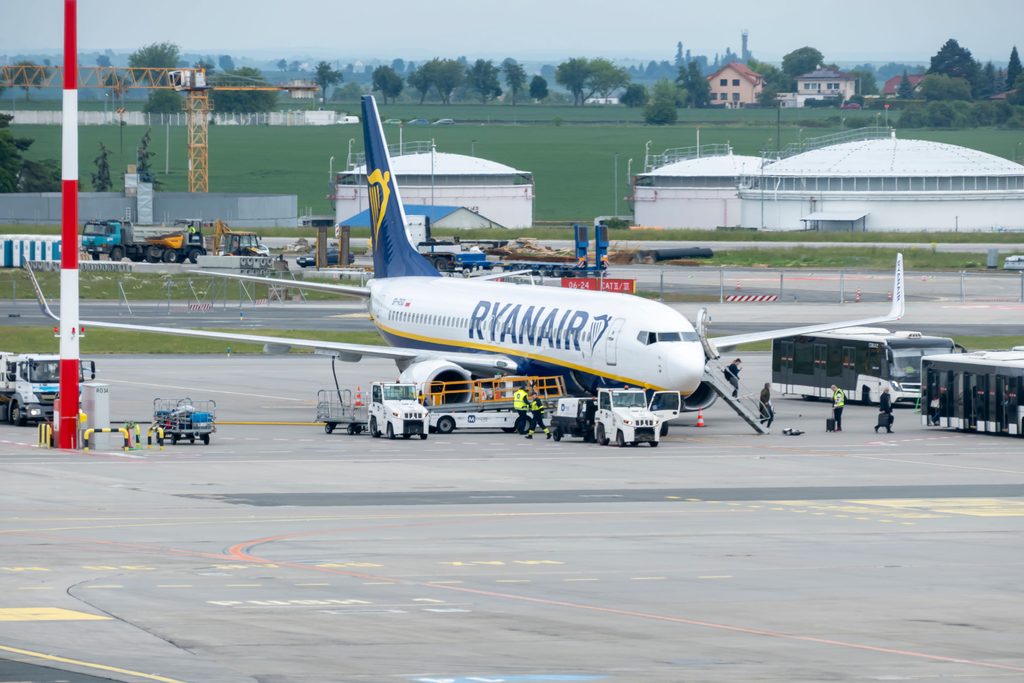
In addition, since June 2026, Zagreb has had a special model for attracting airlines. For a new or poorly served year-round route that meets certain conditions, a 100 percent discount on the landing fee is provided in the first year, 50 percent in the second and 25 percent in the third, along with discounts on the passenger fee of 40, 20 and 10 percent. It has since been learned that the Croatian Government is getting closer to a positive response to the concessionaire’s request. After the global coronavirus pandemic, the concessionaire clearly did not make an effort to retain major carriers such as Emirates, Korean Air and Air Canada, but has mainly turned to the low-cost model.
Ideally, of course, a certain balance should be maintained between low-cost and traditional carriers, especially those hit by the sharp rise in fuel prices due to the war in the Middle East. By raising its charges, Zagreb Airport is losing competitiveness in the market and will find it difficult to compete with airports in the region that are expanding.
what will the government’s decision be?
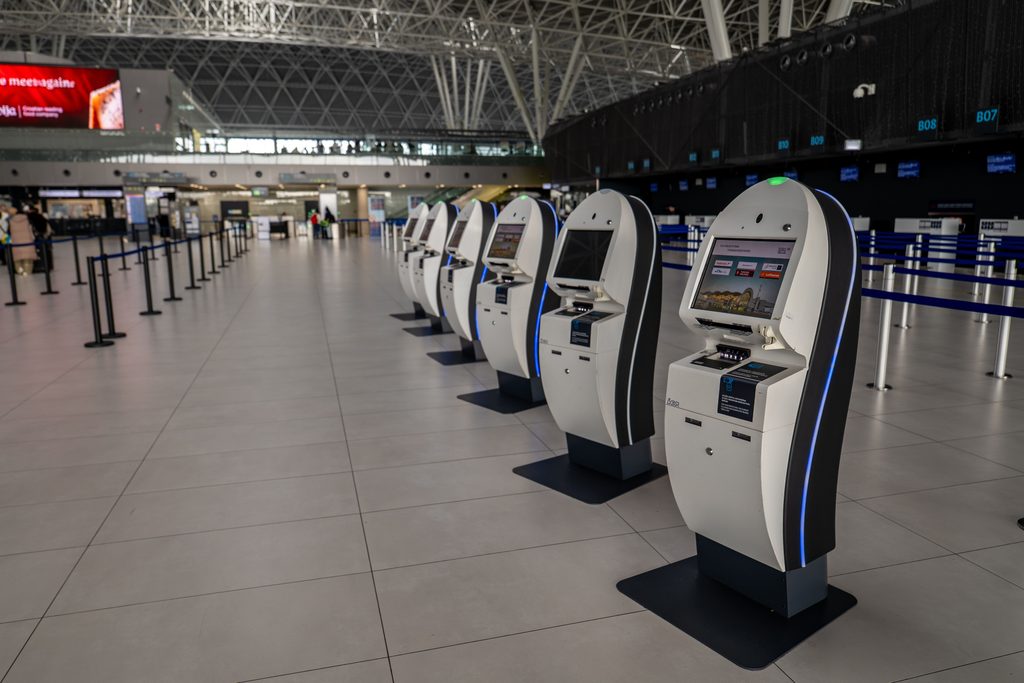
Zagreb Airport has therefore found itself in an unusual situation: its traffic is falling precisely in the period when it is approaching the contractual threshold for a new major investment, while at the same time talks are under way about reopening the old terminal. The key question is whether that project will serve to increase capacity and attract new carriers, or whether it will be used to try to change the concessionaire’s contractual obligations. The answer depends on the conditions the government may eventually accept, particularly on whether all five million passengers will remain a single contractual threshold for the entire airport.