

June the 13th, 2026 – There’s an Osijek park in which you’ll find not only rich greenery and nice landscaping, but sphinxes and Indian mythology. It certainly isn’t what most people expect to stumble upon within the vast, flat plains of eastern Croatia.
Quietly tucked away in central Osijek sits the very unusual Sakuntala Park, one of the city’s most distinctive public spaces by far, and a place that has quietly become one of Croatia’s most interesting urban escapes.
Located between Kapucinska Street and the city’s historic centre, the park dates back to the late 19th century and was created during the height of the Austro-Hungarian fascination with romanticism and distant cultures. Designed in 1890 during Osijek’s period of rapid urban development, the space reflects an era when architecture and landscape design were increasingly influenced by artistic movements and exotic themes.
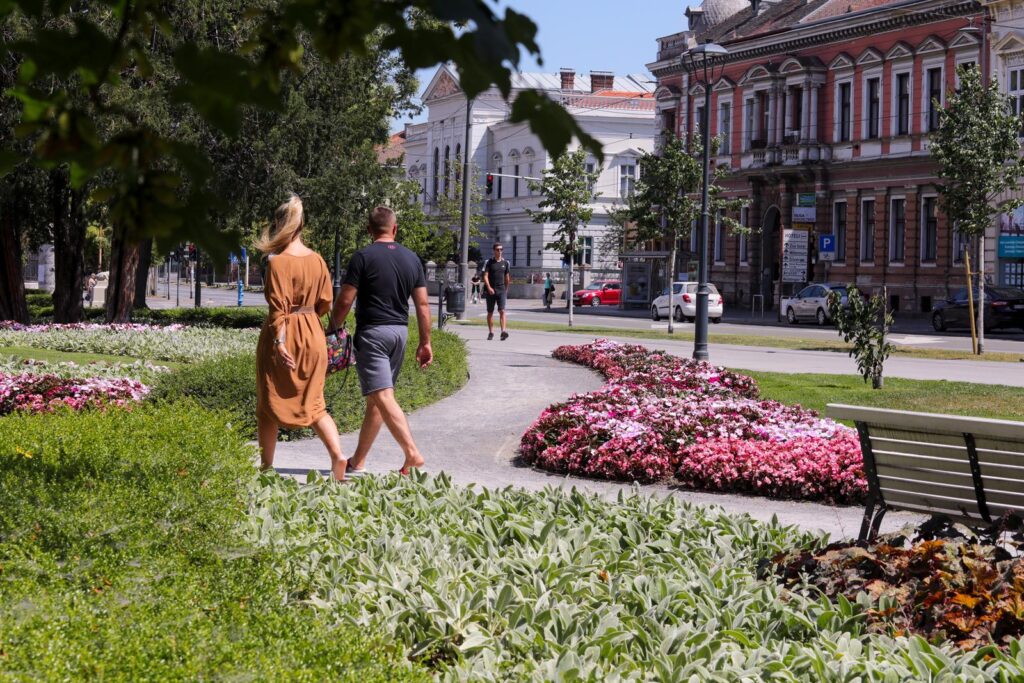
Its name is what makes it stand out. Sakuntala was not a local historical figure but a heroine from ancient Indian literature, best known through the classical Sanskrit work by poet Kalidasa. Her story centres on harmony with nature, love, and destiny, themes that inspired the identity of this Osijek park over a century ago. A statue of Sakuntala became the focal point of the space and gave the park its unusual identity in the middle of the fertile plains of agricultural Slavonia.
As if a touch of India wasn’t enough, at the very entrance to the park stand two stone sphinxes added in 1896, creating one of the more unexpected visual moments in eastern Croatia’s urban landscape. Combined with curved pathways, ornamental greenery, and nearby Secession-era buildings, they give the entire perfectly landscaped area an atmosphere that feels very different from the traditional image of Croatian public parks, particularly those in the widely forgotten east of the country.
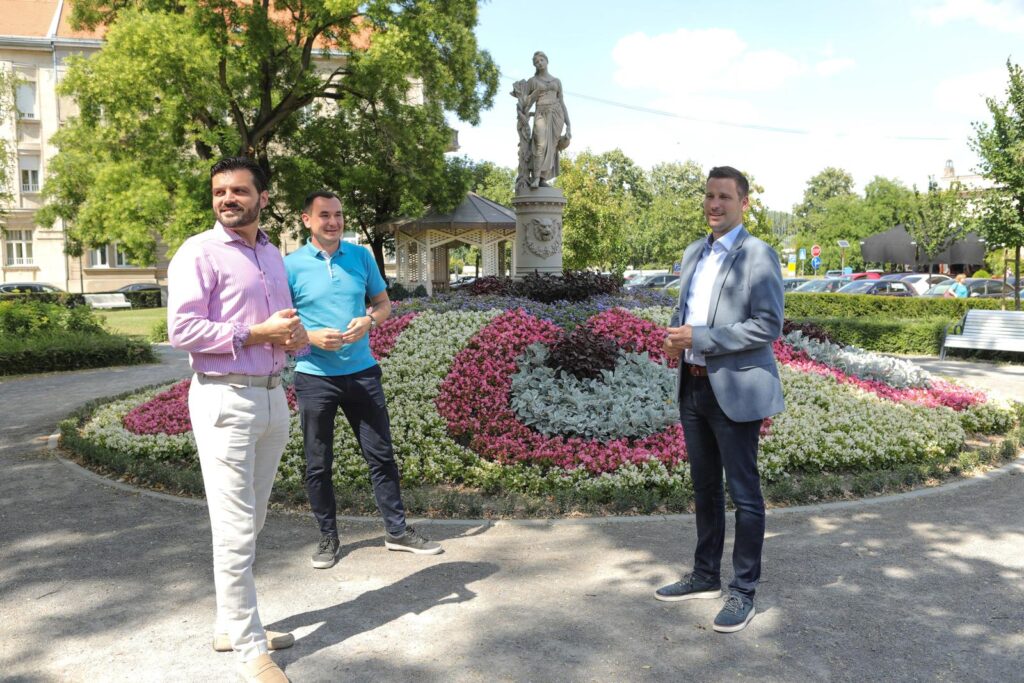
Over the decades and years, this Osijek park changed its appearance several times before undergoing a major restoration project that aimed to return elements of its original Secession-era character while improving public space and landscaping. The reconstruction formed part of a broader effort to revitalise Osijek’s architectural and cultural heritage. Today, Sakuntala Park has become one of Osijek’s most recognisable green spaces.
Not so long ago in 2022, it was voted Croatia’s most beautiful park in a public competition, reinforcing Osijek’s reputation as one of the country’s greenest cities, a city often described locally as having more parks than squares. For visitors to the city, it comes as quite the surprise. You wander in expecting perhaps an Austro-Hungarian-era park full of statues of local people or influential toffs from Vienna, but then you notice the statue, the sphinxes, and the strange feeling that for a few minutes, central Osijek feels a very, very long way from eastern Croatia, or even Europe.