May the 11th, 2026 – Istria is teeming with ancient towns, cities and quaint little villages that go back centuries. It seems odd when we look at the Terra Magica’s history, that there would be something so different. Meet the youngest Istrian town, built in just 397 days.
As Ivana Vasarevic/Putni kofer writes, Istria isn’t called Terra Magica for nothing. From season to season, everything comes alive through the blend of sea, historic towns and native, well-loved food and wine. Olive oil and truffles from Istria are known on a global scale, and for a very good reason.
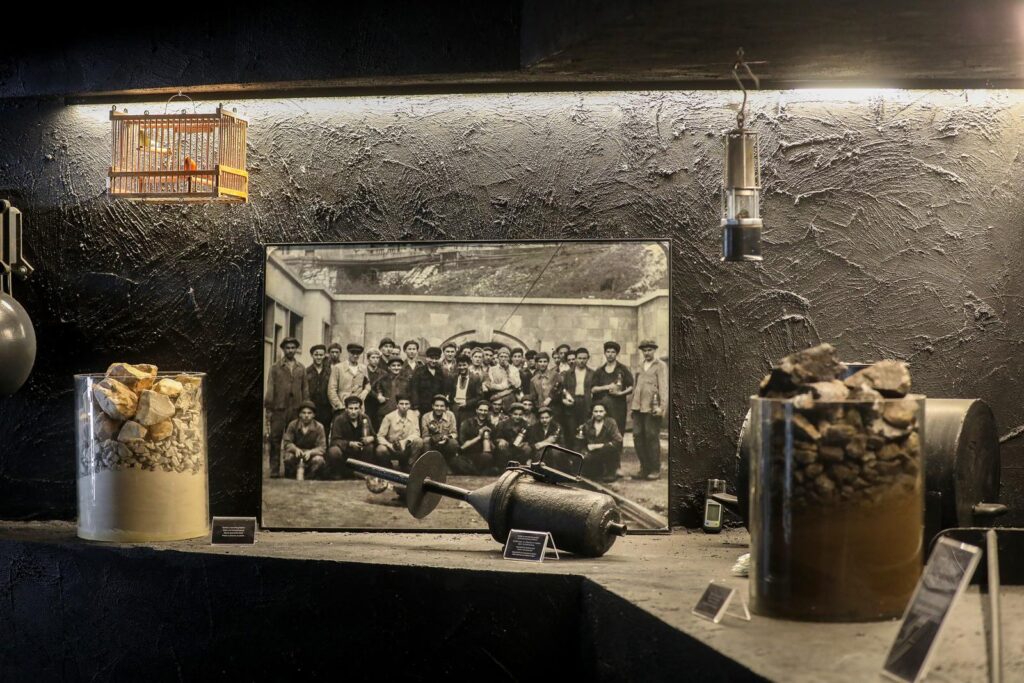
Raša isn’t on the same grand, famous scale as the likes of Pula, but it packs a punch regardless. Although it’s actually the youngest town on the Istrian peninsula, behind its “youth” lies an extremely layered story of industry, urban planning, and normal life. This all unfolded in record time thanks to one single thing, coal mining.
it sprung to life during italian fascist rule

Raša was initially constructed as a mining town to serve the local coal mine when the Fascist Italian administration ruled. Known as the Fascist era by many, few remember the positives that did indeed arise during that time. In the first phase of construction, the youngest Istrian town was erected in a mere 397 days as one of the examples of an Italian-run città di fondazione. This was the Italian term for newly founded towns that were designed and built entirely from scratch according to a pre-planned urban layout.
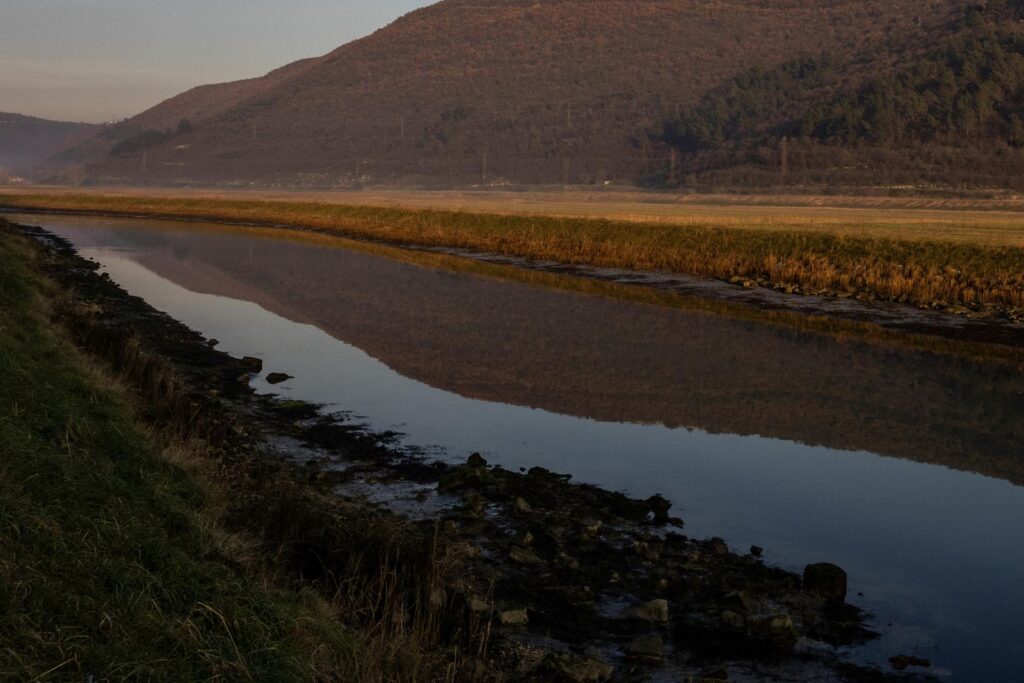
Construction began on March the 10th, 1936, and by April the 10th, 1937, most of the town’s buildings were already finished and ready for occupancy. The official inauguration took place on November the 4th, 1937, shortly before a special decree by the then Italian King Victor Emmanuel III granted the mining settlement town status. Although it was originally supposed to be named Liburnia, the name was changed to Raša (which is Arsia in Italian), after the river that shapes the entire area in this part of Istria. It eventually flows into Raša Bay and then out into the open Adriatic Sea.
an architect from trieste left his permanent mark on istria
The youngest Istrian town built in just 397 days is located in the narrow valley of the Krapan waterway, a tributary of the aforementioned far larger river. Back in 1935, this entire area was more or less a completely barren swamp. Just two years later, it was replaced by Raša, with distinctively whte stone and concrete, yet built from the blackness of local coal.
The town was designed by Gustavo Pulitzer Finali, an architect from Trieste, who planned everything: from the urban layout to public buildings, workers’ houses, and their interiors. Raša was planned for around 2,000 inhabitants and has a very clear, linear arrangement. Two-thirds of the town consist of totally residential zones with workers’ houses and managers’ villas, while the industrial zone with the mine, power plant, and supporting facilities lies to the south of that, tucked slightly out of the way.
is it a bird? is it a plane? no, it’s a church that resembles a mining cart
The reason for the erection of this then brand new town was purely to shorten and simplify the miners’ journey to work and provide them with all of the basic living conditions they’d need in life. This ranged from healthcare to leisure facilities and everything in between. The heart of Raša is (not unlike most other Croatian settlements, small and large) formed by the main square. It has been divided into a larger Piazza and a smaller Piazzetta del Mercato. These very names clearly indicate its Italian origins. The area is shaped so that all of the buildings are interconnected through passages, blending well known modern solutions with traditional Mediterranean-Istrian elements.
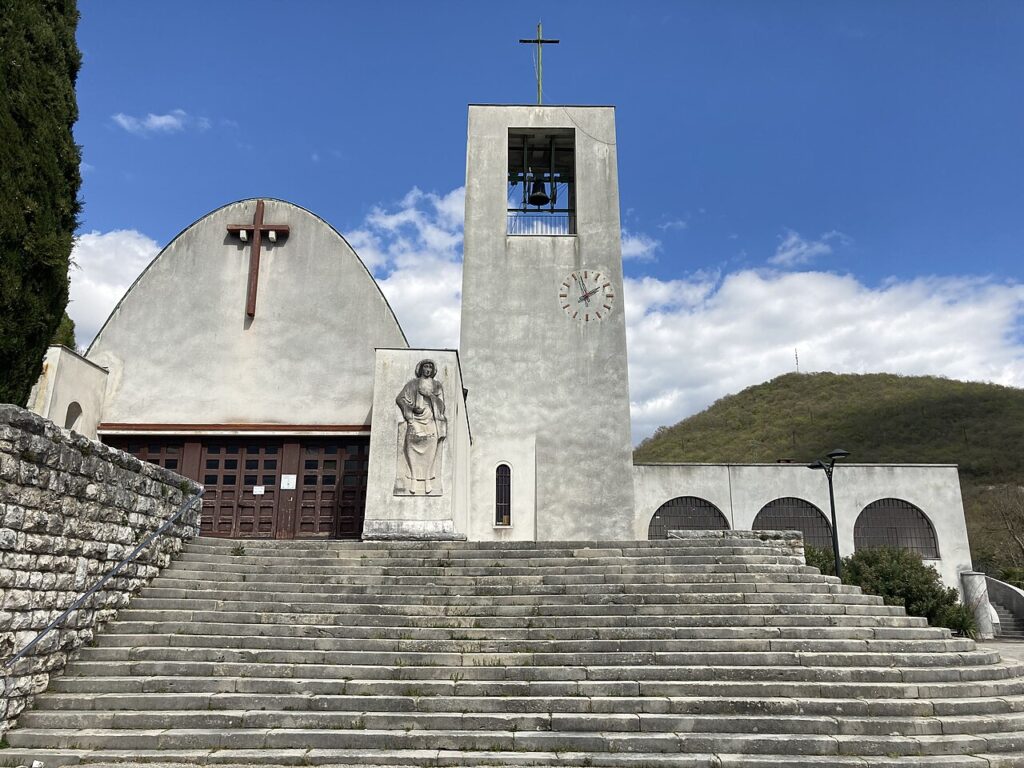
One of the most distinctive buildings in Raša is the Church of St. Barbara, the patron saint of miners. The claim that its shape resembles an overturned mining cart has become an urban legend over time, with people still having divided opinions on that to this very day. Archival material does hint that the barrel shape of the church is connected to what was then a newer tradition of building sacred objects across Central Europe. The bell tower also evokes architectural elements typical of Istria’s Romanesque period.
ancient istria with europe’s (formerly) most modern coal mines
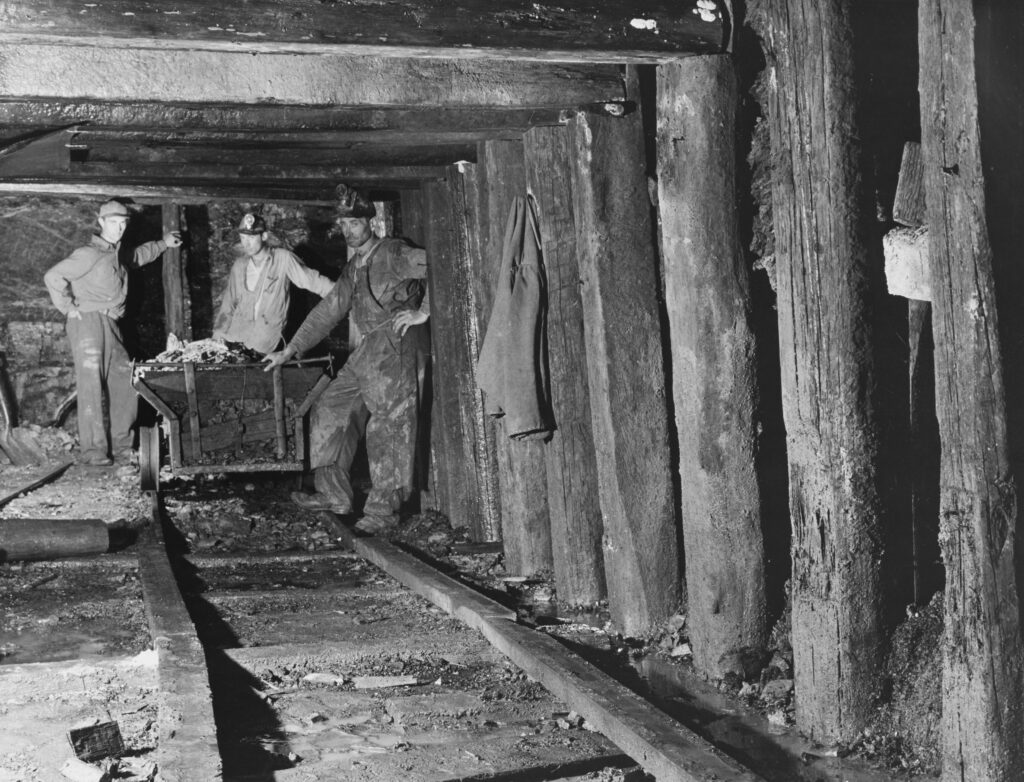
Back during the 1930s, the Raša mines were owned by Azienda Carboni Italiani (A.Ca.I.). They experienced their greatest expansion between 1936 and 1942. They were regarded as the most modern in Europe at the time, employing over 10,000 people. They also eventually reached a record production of a staggering 1,158,000 tonnes of coal in 1942.
italy aside, it wouldn’t be croatia with some ottoman elements…

If you’re in this area, make sure to head to Skitača. It’s a small settlement located at 425 metres above sea level. Surrounded by the Goli, Oštri, Brdo, and Orlić hills, it was founded back during the 15th century by refugees fleeing the invading Ottomans. Its name is believed to come from the ancient Vlach language that was once so widely spoken and written across Croatia, and refers to people of no fixed abode, such as nomads.
hidden gold and underwater tunnels…
Approximately one kilometre south of Skitača, on Cape Crna punta, you’ll find the lighthouse bearing the exact same name, constructed in 1873. Throughout history, it served as an important navigational point toward Rijeka and the Kvarner ports for countless vessels. The complex consists of a small tower and a residential building without any connected electricity, supplied with water from a cistern.
There is also a legend connected to the (in)famous Crna punta about hidden gold and treasure hunters who allegedly discovered mysterious tunnels which were actually built under the sea. Although they only found stone slabs with strange, unexplained symbols, this bizarre, unsolved story continues to intrigue the public.