August the 12th, 2026 – More and more Filipinos are being registered as living and working in Croatia, with the vast majority employed in the tourism and trade sectors.
As Jadranka Dozan/Poslovni reports, over the first seven months of this year, a total of 106,400 permits were issued to citizens of third countries (countries outside of the EEA), of which almost two-thirds were for work in tourism and construction.
The number of issued work permits is reportedly falling, but Interior Ministry data doesn’t show the real number of workers from abroad. The latest data from the Ministry of the Interior on permits issued to foreign workers from so-called third countries only confirmed the continuation of the year-on-year decline in their overall number. This is partly a consequence of the fact that since March last year the maximum duration of permits has been extended from one to three years.
this “decline” isn’t straightforward
How much of this alleged decline is explained by that change in legal rules, and how much is contributed by generally tightened rules or some other reasons (such as meeting part of the need for workers through increased work engagement of domestic pensioners or, for example, returnees to Croatia), the Interior Ministry statistics don’t reveal.
In the first seven months of 2026, a total of 106,400 residence and work permits were issued to citizens of “third countries”, which is 7.5 percent less than last year. Looking only at July, almost 23 percent fewer were issued than last year.
seasonal employment
So far in 2026, the share of permits for seasonal jobs increased significantly, they’re actually up by 40 percent compared to last year – while those for new employment are down 31 percent, and permit extensions are up around 10 percent. Looking only at the month of July, Interior Ministry data reveals that a total of 12,282 positive decisions were issued for imported labour (compared to 15,905 in the same month last year). Almost every fourth of these, or more than 3,000 permits, was given for seasonal work, while just over 9,000 relate to new employment (just under 4,500) and permit extensions (just under 4,800).
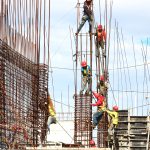
40 percent is how much the number of permits for seasonal jobs has risen this year compared to last year, and it’s far from insignificant. Looking at the situation by activity, almost two-thirds of permits go to the two sectors where the import of workers is normally the most massive, tourism and hospitality, as well as construction. This applies both to those issued last month and to the total number issued since the beginning of the year. However, in construction there are 17 percent fewer this year than in the first seven months of last year, while in tourism and hospitality activities there are 5.4 percent more.
Of the other three most represented sectors when it comes to importing workers, an increase in the number of issued permits in 2026 is recorded only in trade. This also contributes to changes in the structure of issued permits in terms of the origin of workers. By far the largest growth is recorded for those issued to Filipinos – almost 50 percent higher than last year. Filipino workers, in addition to the tourism sector, are most often engaged by employers from the trade sector.
misleading statistics
The Interior Ministry’s records of work permits, however, fail to reveal many things and are certainly not the best indicator of the real situation regarding how many workers from third countries there are in Croatia. Experts on migration and demography have been pointing out the problem of recording foreign workers in general for a long time.
On the occasion of the recent publication of data by the Croatian Bureau of Statistics on migration for 2025, one of the more active among them, Tado Jurić, once again warned about the methodological challenges in this area. From the official data of the Interior Ministry and the CBS (according to which 56,700 immigrated foreign citizens were recorded last year), no one can say with certainty how many of them are actually in Croatia because these are records of different phenomena, he says.
For that reason, the number of insured persons in the Croatian Pension Insurance Institute (HZMO) is usually considered a somewhat more authoritative indicator. In its records in the middle of this year there were a little under 151,000 insured persons who are citizens of third countries (more precisely, with travel documents of those countries), which is about 29,000 more than at the end of last year. Although these are insured persons (which does not automatically mean employees), this is still roughly the indicator closest to reality, and it roughly implies that every 12th person who works and/or pays contributions in Croatia is a foreigner.
“practically half of croatia’s foreign workforce comes from africa and asia”
Given that practically half of the foreign workforce in Croatia today comes from Asia and Africa, migration experts have long emphasised that this requires active management of the processes, both in the context of integration and policies aimed at stronger activation of one’s own potentials. Due to low labour productivity in the public sector, it is often pointed out that there are certain employment reserves there for the entrepreneurial sector, but reforms of that kind do not come easily.